American Saddlebred Pleasure Division

ESC Rule Book
[ivory-search id=”9851″ title=”Saddlebred Pleasure”]

CS1.1 ASB Pleasure Division
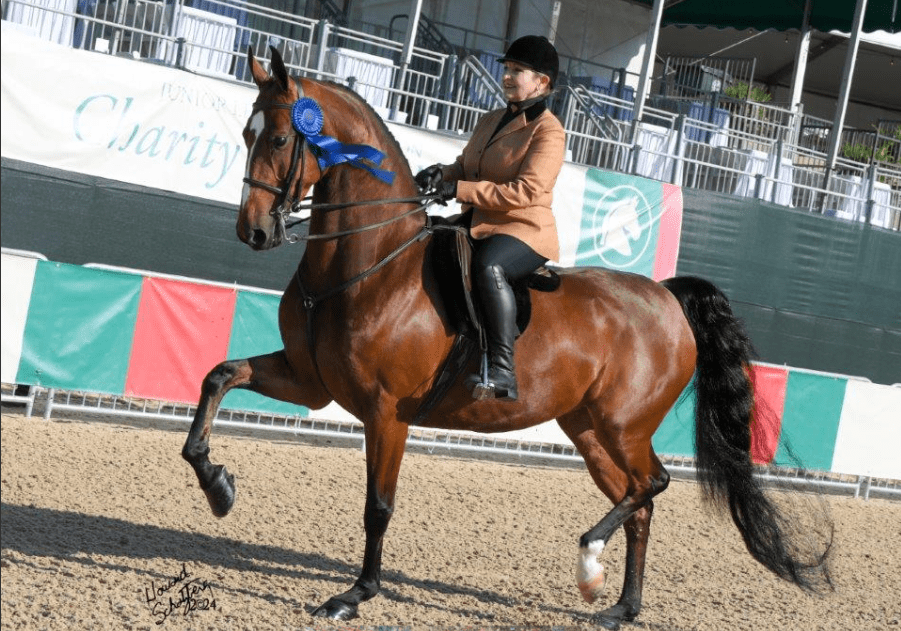
Saddlebred Pleasure Division
- Three Gaited – English Country Pleasure
- Driving – English Country Pleasure
- Five Gaited – English Country Pleasure
- Trail – English Country Pleasure
- English Pairs
- English Combination
- English & Western Versatility
- Hunter Country Pleasure
- Hunter Country Pleasure Prospect
- Hunter Seat Classic – Saddle & Bridle
- CS1.1c Park Pleasure Division
- Park Pleasure – Country Three Gaited
- Park Pleasure – Three Gaited
- Park Pleasure – Driving
- CS1.1d Show Pleasure Division
- Show Pleasure – Walk/Trot
- Show Pleasure – Three Gaited
- Show Pleasure – Five Gaited
- Show Pleasure – Driving
- CS1.1e Western Country Pleasure Division
- Western Country Pleasure
- Western Country Pleasure – Walk/Jog
- Western Country Pleasure – Prospect
- Western Country Pleasure – Championship
- Western Show Pleasure
- Shatner Western Pleasure
- Shatner Working Western Pleasure
- Western Trail
- Western Pairs
- Western & English Versatility
The American Saddlebred/Half Saddlebred Pleasure Horse should embody quality, style, presence, and suitable conformation, with comfortable gaits that suggest it is a pleasant mount to ride. Desired traits include easy, ground-covering action.
Manners and suitability as a Pleasure mount are of utmost importance. A true, flat walk is emphasized, while laboring action, pulling, tossing the head, going sideways, and tail-switching should be penalized. Show Pleasure is exclusively open to Juvenile and Amateur riders and drivers.
Horses competing in other sections within the American Saddlebred/Half American Saddlebred division are ineligible to compete in the American Saddlebred/Half American Saddlebred Pleasure horse section at the same event, with the exception of In-Hand and Parade Horse classes if shown by an amateur.
Cross-entered horses between the Parade and Pleasure sections at the same competition are not allowed to use artificial appliances or devices and must adhere to the pleasure appointment and tails rules while on the competition grounds, before and during competition.
American Saddlebred and Half American Saddlebred Pleasure horses may participate in other divisions or multi-breed classes at the same competition for which they are qualified. Professionals may show the American Saddlebred/Half Saddlebred Pleasure horse in In-Hand, Model, another division, or multi-breed classes, and the horse would still be eligible to compete in Pleasure horse classes at the same competition. Cross-entering between Show Pleasure and Country Pleasure, Three-gaited Pleasure, and Five-Gaited Pleasure at the same competition is prohibited.
Entries must be shown with a full mane and tail. Tails must not be put in any device that alters their carriage while on the competition grounds, except for horses showing in the Show Pleasure division, where tail sets or bustles are permitted. The tail may not be tied or braced, and unset tails will not be penalized.
The use of artificial appliances or devices such as chains, shackles, rubber bands, blinkers (except when driving), or blindfolds is prohibited on the grounds before or during competition. Any animal with prohibited equipment must be disqualified from further competition and forfeit all entry fees and winnings.
The use of protective equipment such as non-weighted bell boots, shin boots, etc., is allowed on the grounds and in the warm-up areas prior to entering the competition ring. Stallions are prohibited except in Weanling and Yearling In-Hand classes.
Horses must be shown by an amateur or by a Juvenile Exhibitor. Amateurs and Juvenile Exhibitors may not compete in the same class, except in restricted classes and Championships, and at competitions where there are insufficient entries to fill two classes.
CS1.1a English Country Pleasure Division
The English Country Pleasure horse may possess less showiness compared to the Show Pleasure horse but should still embody the typical characteristics of the breed. Easy, ground-covering action is preferred, with the emphasis on showcasing the best quality specimens of the American Saddlebred breed.
Shoeing – English Country Pleasure horses must be plain shod or unshod. Permissible shoeing includes a shoe inclusive of caulks, which may be thicker at the heel. Toe clips and side clips are allowed. An eggbar shoe is also permissible. A ¼” thick leather rim pad, no wider than the shoe, is allowed to maintain the integrity of the hoof wall. Not allowed as are full pads of any kind, wedges, bands, bars, lead, springs, any addition below the bottom of the shoe, and any foreign substance not named as permitted. The entire sole and frog of the foot must be visible. Horses with prohibited shoeing will be disqualified from further competition at that show and forfeit all entry fees and winnings. Five-Gaited classes allow quarter boots and bell boots.
Mane & Tail – Horses to be shown with a full mane and tail. Entries are eligible if their tails have been previously set, but they may not put in any device that modifies their carriage ability on show property. Artificial manes and braids are prohibited, however discreetly added hair in the tail is acceptable.
Tack & Apparel
For Saddle Seat classes:
- Bridle: A double bridle consisting of both a snaffle and curb is preferred and must be suitable for the horse. Horses are not permitted to be shown with only a snaffle bit, breastplate, tie-down, or martingale. Exception: 2-Year-Olds may be shown in a snaffle bridle with a running martingale if such is specified in the prize list.
- Saddle: The saddle should an English-type flat saddle with either a leather or web girth.
- Attire: Riders are required to wear informal saddle seat attire with a coat and hat or protective headgear. It is advised to avoid loud or flashy colors.
For driving classes:
- Entries are to be shown to a two-wheeled jog cart with only the driver..
- Light show harness with blinkers, a martingale, and a snaffle bit (straight or jointed) are required. An overcheck or sidecheck is also necessary, with the overcheck or sidecheck bit being optional.
- The driver is expected to dress conservatively and avoid wearing period attire.
Gaits
In classes, horses are to be shown at a flat walk, trot, extended trot, and canter, with the addition of slow gait and rack in Five-Gaited classes. A flat walk, trot, and extended trot are called for in Driving classes..
Standards of Judging
Manners and suitability as a pleasure mount are of utmost importance. Smooth and effortless transitions between gaits are expected, with horses being agreeable and showing prompt transitions between gaits. There is a special emphasis on a true, flat walk.
Entries must be asked both ways of the ring to halt and stand quietly on the rail. In the line up, entries must stand quietly and back readily. Penalties will be applied for head tossing, pulling, laboring action, sideways movement, and tail-switching.
ENGLISH COUNTRY PLEASURE CLASSES OFFERED
Three Gaited – English Country Pleasure
The class requires horses to be shown at a flat walk, trot, extended trot, and canter. Judging will be based on 75% on manners, performance, presence, and quality, with 25% on total conformation.
Driving – English Country Pleasure
In this class, horses are to be presented to a suitable two-wheeled jog cart with only the driver. Light show harness with blinkers, a martingale, and a snaffle bit (straight or jointed) are required. Additionally, an overcheck or sidecheck is necessary, with the overcheck or sidecheck bit being optional. The driver should dress conservatively, avoiding period attire.
Horses are to be shown at a flat walk, trot, and extended trot, with penalties for excessive speed. Judging will be based on 75% on manners, performance, presence, and quality, with 25% on total conformation. During any workout, headers are permitted for those not participating on the rail.
Five Gaited – English Country Pleasure
The class entails presenting horses at a flat walk, trot, extended trot, slow gait, rack at moderate speed, and canter. Evaluation criteria include 75% on manners, performance, presence, and quality, with 25% on total conformation.
Trail – English Country Pleasure
In this class, horses will be required to navigate through a minimum of five obstacles while maintaining a flat walk, trot, and canter on a reasonably loose rein without undue restraint. Judging will be based on 75% on manners, performance, presence, and quality, with 25% on total conformation.
English Pairs
In this class, horses are to be exhibited at a flat walk, trot, and canter. Judging will be based on 75% on manners, performance, presence, quality, and conformation, with an additional 25% on the uniformity and neatness of attire.
English Combination
In this class, horses will be presented both in harness as a driving horse and under saddle as a Three-Gaited horse, using English equipment. There will be a change of equipment made in the ring between the two phases of the competition. Each phase of the competition will count for 50% of the overall score.
The prize list should specify whether the driver and rider must be the same individual for both phases of the class.
English & Western Versatility
In this class, horses will be presented first with Western Equipment at a flat walk, jog-trot, and lope in both directions of the ring. Then, they will be shown with English Equipment at a flat walk, trot, extended trot, and canter in both directions of the ring. There will be a change of equipment for both horse and rider made in the ring between the two phases of the competition. Each phase of the competition will count for 50% of the overall score. The prize list should specify whether riders must be the same individual for both phases of the class.
CS1.1b Hunter Country Pleasure Division
The Saddlebred Hunter Country Pleasure Horse must be portrayed as an overall pleasurable ride, with a relaxed attitude and a lower natural neck carriage positioned with a slight pole bend. Typically, a longer body frame compared to Saddlebred Country Pleasure Horses. Higher headed horses or set behind the pole should be penalized. The best quality Saddlebred, according to breed standards should always prevail. Professionals may compete in the Hunter Country Pleasure Prospect or open Hunter Country Pleasure classes, provided two additional Hunter classes restricted to amateurs are available at the same event. For safety considerations, the judge may restrict the number of horses allowed to perform an extended canter simultaneously in any hunter class.
Shoeing: Horses in competition must adhere to specific regulations regarding their shoeing. They are allowed to be either plain shod or unshod. “Plain shod” refers to a shoe, which may include caulks, and may be thicker at the heel. Additionally, toe clips and side clips are permissible, as well as eggbar shoes. A ¼” thick leather rim pad, no wider than the shoe, is allowed to maintain the integrity of the hoof wall.
However, certain elements are not allowed with plain shoeing, including bands, bars, full pads of any kind, wedges, lead, springs, or any attachment extending below the shoe. Any foreign substance not explicitly permitted is also prohibited. It is essential that the sole and entire frog of the foot remain visible.
Any horse found with prohibited shoeing will be disqualified from further competition. These regulations ensure fairness and safety in competitive events.
Mane & Tail: Horses have the option to appear with a conservative braided mane and tail. However, horses will not face penalties for showing with a full, unbraided mane and tail. It’s important to note that tails must not be manipulated with any device such as a tailset, bustle, or brace that alters their natural carriage while on the show grounds. Even if a horse’s tail has been set previously, this doesn’t disqualify them from participating. Artificial manes are not allowed, but inconspicuously applied hair in the tail is permitted. These guidelines ensure fairness and preserve the natural appearance and movement of the horses during competition.
Tack & Apparel:
Entries will be penalized for incomplete Tack & Apparel. Hunter pleasure horses are required to be presented with traditional hunter-style equipment, including a browband and caveson of hunter type. Incorrect non-hunter style browband and caveson requires disqualification.
Bridle: Options include a snaffle bridle, pelham with two reins, kimberwick bits, or a full bridle (curb and snaffle). If a full bridle is used, it must adhere to the hunter style, with curb shanks and pelhams not exceeding five and a half inches (5.5″). Breastplates are permitted, but martingales are prohibited.
Saddle: A forward or balance hunt seat style saddle is required. An appropriate style side saddle is permitted as an exception.
Attire: Riders should wear traditional hunter-style attire, including a jacket, breeches or hunter jodhpurs, a dark hunt cap, derby, or protective headgear, along with appropriate boots. Tall dress or tall field boots are preferred, with paddock or jodhpur boots and matching half chaps also permitted. A stock, choker, or four-in-hand tie with any color shirt is acceptable. Shadbellies are prohibited. Jackets should be of traditional colors and materials suitable for hunting, with discrete patterns allowed. Brocades, raised patterns, glossy/metallic/shiny fabrics or materials are prohibited and may be penalized at the Judge’s discretion. Ornamentations or attire items are also prohibited, except for certain exceptions like a stock or lapel pin, tie clip, number magnets, or tie tack. Side saddle riders may wear a skirt, divided skirt, or apron.
In all classes, gloves, a hunter crop or bat, spurs, and Tack & Apparel are optional. Junior riders must wear headgear with a protective harness attached when mounted, and wearing protective headgear is permitted without penalty. Members of the Armed Services or the Police may wear the Service Dress Uniform.
Gaits
Exhibitors are expected to demonstrate a walk, trot with forward-moving stride, extended trot, canter, and extended canter in both directions of the ring. Judges may limit the number of horses shown at extended canter for safety reasons. Entries are required to halt and stand quietly on the rail in both directions of the ring. Manners, suitability as a pleasure mount, smooth and effortless transitions between gaits, and obedience with prompt transitions are all paramount.
Standards of Judging
Specifically for Hunter Country Pleasure Horses, competitors enter the ring at the trot in a counterclockwise direction. Light contact with the horse’s mouth must be maintained at all gaits, with judges giving equal consideration to performance at each gait when evaluating the class.
HUNTER COUNTRY PLEASURE CLASSES OFFERED
Hunter Country Pleasure
Classes are available in various categories including Open, All Ages, Ladies, Gentlemen, Adult Amateur, Master, Juvenile, Maiden, Novice, Youth, Limit, Junior, Championship, or Stake. Entries are expected to demonstrate a walk, trot, extended trot, canter, and extended canter in both directions of the ring. Entries will be required to halt and stand quietly on the rail in both directions of the ring. Judging criteria will include manners, performance, suitability as a Hunter, quality, and conformation. While in line, horses must stand quietly with all four legs perpendicular to the ground, and they should readily back up when required.
Hunter Country Pleasure Prospect
This class is exclusively open to horses competing in their first or second competition years as Hunter Country Pleasure horses. Comprehensive competition records for licensed or open shows should be verified on Saddle Horse Report. Exhibitors may include professionals, amateurs, or Juvenile Exhibitors. Entries are expected to demonstrate a walk, trot, extended trot, canter, and extended canter in both directions of the ring. Entries will be required to halt and stand quietly on the rail in both directions of the ring. Judging will focus on suitability as a Hunter, manners, performance, quality, and conformation. While in line, horses must stand quietly with all four legs perpendicular to the ground, and they should readily back up when required.
Hunter Seat Classic – Saddle & Bridle
Please refer to https://saddleandbridle.com/classes for rules and regulations.
CS1.1c Park Pleasure Division
The emphasis is on elegance, finesse, and polished performance across all gaits. Participation is open to both seasoned equestrian professionals and amateur enthusiasts. Horses exhibited in any class within this category are not eligible to compete in the American Saddlebred Performance Division, including Three-Gaited, Five-Gaited, Fine Harness, and Park Horse classes, or the American Saddlebred Pleasure and Country Pleasure divisions at the same event, except for participation in In-Hand or Model classes. Eligibility is limited to mares and geldings.
Shoeing: Country Park Pleasure horses must be fitted with plain shoes, which may include certain specifications such as thickness at the heel, toe clips, and side clips. Eggbar shoes are also permitted. A ¼” thick leather rim pad, no wider than the shoe, is allowed to maintain the integrity of the hoof wall. Prohibited shoeing features include bands, bars, full pads, wedges, and any extensions below the shoe. The horse’s sole and entire frog must be visible. Disqualification applies to any animal with unauthorized shoeing.
Equipment: Entries must maintain a full mane and tail. Park Pleasure horses may utilize tail sets or bustles but are not permitted to have their tails tied or braced. Unset tails will not incur penalties. The use of artificial aids like chains, shackles, rubber bands, blinkers (except during driving), or blindfolds is strictly forbidden on the showgrounds before or during the event. Any animal found with prohibited equipment will be disqualified from further competition, resulting in the forfeiture of entry fees and winnings.
Tack & Apparel
A double bridle consisting of both snaffle and curb is preferred, tailored to suit the individual horse. No horse is permitted to be shown solely with a snaffle bit, breastplate, tiedown, or martingale. (Exception: Two-year-olds may use a snaffle bridle with a running martingale if specified in the prize list and if they compete separately from others using identical equipment). The saddle should be a flat, English-style saddle with either leather or web girth. As for attire, riders should opt for informal attire, including a coat and hat, or protective headgear. Vibrant or loud colors should be avoided.
Gaits
Park Pleasure horses are to be presented at a flat walk, trot, and canter, while Country Park Pleasure horses should showcase a true flat walk, trot, extended trot, and canter.
Standards of Judging
Park Pleasure horses are judged based on manners, performance, presence, quality, and conformation. Country Park Pleasure horses should exhibit obedience with prompt transitions and must halt and stand quietly on the rail in both directions of the ring.
PARK PLEASURE CLASSES OFFERED
Park Pleasure – Country Three Gaited
For horses qualified to participate in classes such as OPEN, JUNIOR, THREE-YEAR-OLD, MAIDEN, NOVICE, LIMIT, AMATEUR, or MASTER, they are to be presented at a true flat walk, trot, extended trot, and canter. During the course, horses must be asked to halt and stand quietly on the rail in both directions of the ring. Additionally, they are expected to stand calmly and back readily during the line-up. Judging criteria allocate 75% of the score to manners, performance, presence, and quality, with the remaining 25% focusing on overall conformation.
Park Pleasure – Three Gaited
For horses qualified to compete in the OPEN, JUNIOR, THREE-YEAR-OLD, MAIDEN, NOVICE, LIMIT, AMATEUR, or MASTER classes: They are to be exhibited at a flat walk, trot, and canter. During line-up, horses must display quiet standing and readiness to back. Judging criteria are divided as follows: 75% for manners, performance, presence, and quality; and 25% for overall conformation.
Park Pleasure – Driving
For horses eligible to compete in the OPEN, JUNIOR, THREE-YEAR-OLD, TWO-YEAR-OLD, MAIDEN, NOVICE, LIMIT, AMATEUR, or MASTER divisions: They are to be presented in a two-wheeled jog cart with driver only. Horses should demonstrate a flat walk, trot, and extended trot, with penalties applied for excessive speed. The equipment should include a light harness with blinkers, martingale, snaffle bit, and overcheck, with the overcheck bit being optional. Horses are also expected to back upon request. Evaluation criteria comprise 75% for manners, performance, presence, and quality, and 25% for overall conformation.
CS1.1d Show Pleasure Division
The English Show Pleasure horse typically exhibits less action than the Three-Gaited, Five-Gaited, and Fine Harness Performance horses, but should remain alert and prompt in their response. Action should be naturally high and free-moving.
Penalties will be applied for laboring action caused by excessive weight of shoes or length of foot. Entries must be shown with a full mane and tail. Horses in this division may wear tail sets or bustles, but the tail shall not be tied or braced, and unset tails will not be penalized. Braids and discreetly applied hair in the mane and tail are allowed. Pads and bands are permitted. Quarter boots and bell boots are only allowed in Five-Gaited classes.
Tack & Apparel:
Under Saddle
Bridle: A double bridle consisting of both a snaffle and curb is preferred and must suit the horse. Horses are not allowed to be shown with only a snaffle bit, breastplate, tie-down, or martingale. Exception: 2-Year-Olds may be shown in a snaffle bridle with a running martingale if such is specified in the prize list.
Saddle: An English-type flat saddle, with either a leather or web girth, should be used.
Attire: Riders are required to wear informal attire with a coat and hat or protective headgear. Loud or flashy colors should be avoided.
Driving:
Entries are to be shown only with a two-wheeled jog cart. Light harness with a snaffle bit, martingale, blinkers and overcheck are required. The use of an overcheck bit is optional. The driver is to dress conservatively and period attire is not permitted.
Gaits
Horses are to be shown at a flat walk, trot, and canter, with the addition of slow gait and rack in Five-Gaited classes. In Driving classes, the gaits are flat walk, trot, and extended trot. Manners and suitability as a Pleasure mount are of paramount importance, with smooth and effortless transitions between gaits, with light contact with the horse’s mouth being maintained. A flat walk is mandatory. Entries must stand quietly in the line up and back promptly. Penalties will be applied for head tossing, pulling, laboring action, sideways movement, and tail-switching.
Class Divisions
Model, Side Saddle, Antique Carriage with Period Costume, etc., classes may be offered for Show Pleasure. Classes may be divided based on the sex or age of the horse, height, sex or age of the rider, with or without Championships, and according to Maiden, Novice, Limit, Junior (Four-Year-Olds & Under), Masters, Owners, and Youth classes in all classifications and Amateur-Owner-Trainer.
SHOW PLEASURE CLASSES OFFERED
Show Pleasure – Walk/Trot
For riders 12 years of age and under who have never been judged in a class wearing a full suit that required a canter. The class will consist of showing at a flat walk and trot. Riders will not be asked to back their horses. Horses must stand quietly in the lineup. Headers will be permitted in the lineup and will be called in by the announcer after the class has lined up and before they are judged. One attendant without a whip will be allowed to head each horse during the lineup. Judging will be based on manners, performance, presence, quality, and conformation.
Show Pleasure – Three Gaited
Shown at a flat walk, trot and canter. Judged 75% on manners, performance, presence and quality; 25% on total conformation.
Show Pleasure – Five Gaited
Horses are to be presented at a flat walk, trot, slow gait, rack at moderate speed, and canter. Judging will be based on 75% on manners, performance, presence, and quality, with 25% on total conformation.
Show Pleasure – Driving
The class requires horses to be shown to a two-wheeled jog cart with the driver only. They should be presented at a flat walk, trot, and extended trot, with penalties for excessive speed. Light harness with snaffle bit, blinkers, a martingale, and overcheck are mandatory, with the overcheck bit being optional.
Judging will be based on 75% on manners, performance, presence, and quality, with 25% on total conformation.
CS1.1e Western Country Pleasure Division
In Western Pleasure and Trail classes, a lower head carriage should not be penalized. The Western equipment horse should be heavier bodied, especially in the rear, have prominent withers and be close-coupled. As with all Purebred Saddlebred/Half Saddlebred divisions, the emphasis is on presenting the best quality specimens of the breed.
Western Country Pleasure horses must be plain shod or unshod. Permissible shoeing includes a shoe (inclusive of caulks), which may be thicker at the heel. Toe clips and side clips are allowed. An eggbar shoe is also permissible. A ¼” thick leather rim pad, no wider than the shoe, is allowed to maintain the integrity of the hoof wall. Not allowed as plain shod are full pads of any kind, wedges, bands, bars, lead, springs, any addition below the bottom of the shoe, and any foreign substance not named as permitted. The entire sole and frog of the foot must be visible. Horses with prohibited shoeing will be disqualified from further competition at that show and forfeit all entry fees and winnings.
Horses must be shown with a full mane and tail. Tails must not be put in any device (such as a tailset, bustle, or brace) that alters their carriage while on the grounds. However, participation is not excluded if a horse’s tail has once been set. Braids and artificial manes are prohibited, though discretely applied hair in the tail is permitted.
If judges need to inspect bridles, it is their duty alone to carry out this task. They may assign a steward to perform bridle checks at the exit gate, necessitating riders to dismount.
Professionals are eligible to participate in American Saddlebred division classes labeled as Open in Western Country Pleasure Prospect, Junior Horse, Maiden/Novice/Limit Horse, and Western Country Pleasure categories, provided that two additional Western classes exclusive to amateurs are available at the same event. Entries are expected to demonstrate a flat walk, jog-trot, and lope with a reasonably slack rein, emphasizing good manners and suitability as a pleasure mount. Smooth and effortless transitions between gaits are encouraged.
Tack & Apparel
Entries will be penalized for incomplete Tack & Apparel but do not have to be disqualified. Attire for riders includes a Western hat, a long-sleeved shirt or jacket with a collar, and a necktie, kerchief, or bolo/bow/peddle/rosette-tie or pin used as a tie. Trousers or pants are required, with chaps, shotgun chaps, or chinks and western-style boots also mandatory. Optionally, a vest, coat, or sweater may be worn. Protective headgear with a harness is optional in all classes and does not have to be Western-style. Spurs are at the discretion of the rider, while whips are prohibited except for those riding side saddle.
Side Saddle: For side saddle riders, an apron of closed or button type with a belt under loops is mandatory. It is recommended to use an apron with a waistband cut similarly to chaps and double thickness in classes where chaps are compulsory.
Entries must be shown with a western stock saddle, with silver equipment not factored into judging decisions. A side saddle is considered legal equipment, while tapaderos are prohibited, hobbles and riata are not required.
In terms of bridles and bits, there should be no bias against any standard Western bit. A standard Western bit is defined with specific measurements for the shank and mouthpiece (see appendix). Prohibited bits include slip or gag bits, rigid donut mouthpieces, and flat polo mouthpieces. Mouth controls are allowed. Curb chains may be wrapped. The use of snaffle bits and hackamores is permitted in certain circumstances, with strict guidelines provided for their use.
Judges do not have the authority to modify the specified standard equipment.
Gaits
Exhibitors are expected to demonstrate a flat walk, jog-trot, and lope with a reasonably slack rein, emphasizing good manners and suitability as a pleasure mount. Smooth and effortless transitions between gaits are encouraged.
Standards of Judging
Entries should exhibit obedience with prompt transitions, with a particular emphasis on maintaining a true, flat walk. Upon request, horses must halt and stand quietly on the rail in both directions of the ring. Additionally, they must stand calmly and back willingly in the lineup. Undesirable behaviors such as head tossing, pulling,laboring action, sideways movement, and tail-switching will be penalized.
WESTERN COUNTRY PLEASURE CLASSES OFFERED
Western Country Pleasure
For classes such as Open, Amateur, Masters, Maiden, Novice, Limit, Mares, Geldings, Junior Horse, OTR, Ladies, Gentlemen, Juvenile Exhibitor, and Youth, exhibits are expected to demonstrate a flat walk, jog-trot, and lope. They should stand quietly and back readily. Riders are permitted to use only one hand on the reins, and hands must not be switched except when necessary to navigate an obstacle in a Trail Horse Class. The rider’s hand should encircle the reins. In cases where the split reins’ ends fall on the side of the reining hand, one finger between reins is allowed. However, when using a romel or holding the ends of split reins with the hand not used for reining, no finger between reins is permitted. The rider may hold the romal or the ends of split reins to prevent swinging and adjust their position, provided there is at least 16 inches of rein between the hands. Entries will be evaluated based on manners, performance, quality, and conformation.
Western Country Pleasure – Walk/Jog
For riders aged 12 and under, horses will be shown and judged following the guidelines of other Western Country Pleasure classes, with the exception that horses will not be required to halt on the rail or back. Riders in this category must not have previously participated in any class that involved cantering or loping. Headers will be allowed in the lineup and will be announced by the announcer after the class has lined up and before judging commences. Each horse may have one attendant without a whip to assist with heading during the lineup.
Western Country Pleasure – Prospect
This class is exclusively open to horses competing in their first or second competition years as Western Country Pleasure horses, as verified by ASHBA records. Exhibitors may include professionals, amateurs, or Juvenile Exhibitors. Hackamores and snaffle bits are allowed. Horses are expected to demonstrate a flat walk, jog-trot, and lope, and should stand quietly and back readily. Only one hand may be used on the reins, except for riders using hackamores and snaffle bits, who are permitted to use two hands. Hands must not be changed during the performance. The rider’s hand should encircle the reins, with one finger between the reins permitted when the split reins’ ends fall on the side of the reining hand. However, when using a romel or holding the ends of split reins with the hand not used for reining, no finger between reins is allowed. Riders may hold the romal or the ends of split reins to prevent swinging and adjust their position, provided there is at least 16 inches of rein between the hands. Exhibits will be evaluated based on manners, performance, quality, and conformation.
Western Country Pleasure – Championship
This class is reserved for horses that have participated in the Amateur, Masters, Juvenile Exhibitor, and Youth Western Country Pleasure classes. To qualify, the horse must have been entered, shown, and judged in a specified qualifying class. Exhibitors are expected to demonstrate a flat walk, jog-trot, and lope with a reasonably slack rein, without undue restraint (ridden with one hand on reins). They should stand quietly and back readily. Judging criteria will include manners, performance, quality, and conformation.
Western Show Pleasure
This class is reserved for entries in the Amateur, Masters, Juvenile Exhibitor, and Youth. This class will be presented at a flat walk, jog-trot, and lope, with riders using only one hand on the reins. Judging will be based on a 75% assessment of manners, performance, presence, and quality, with the remaining 25% attributed to overall conformation.
Shatner Western Pleasure
Please refer to the website for “Saddle & Bridle” Magazine at www.saddleandbridle.com.
Shatner Working Western Pleasure
Please refer to the website for “Saddle & Bridle” Magazine at www.saddleandbridle.com.
Western Trail
Exhibits will navigate a minimum of five obstacles and demonstrate a flat walk, jog-trot, and lope with a reasonably slack rein, without undue restraint. Only one hand may be used on the reins, with hands not to be changed except when negotiating an obstacle in a Trail Horse Class (two hands are permitted for Hackamores and snaffle bits). Judging will be weighted 75% on manners, performance, presence, and quality, with the remaining 25% focused on total conformation.
Western Pairs
Exhibits will be presented at a flat walk, jog-trot, and lope, with riders using one hand on the reins, as specified. The judging criteria will emphasize manners, performance, presence, quality, and conformation, accounting for 75% of the evaluation. Additionally, 25% of the assessment will consider the uniformity and neatness of attire.
Western & English Versatility
Horses will be presented first with Western Equipment, demonstrating a flat walk, jog-trot, and lope in both directions of the ring. Subsequently, they will transition to English Equipment, showcasing a flat walk, trot, extended trot, and canter in both directions of the ring. The change of equipment for both horse and rider will occur in the ring. Each phase of the competition will be weighted equally at 50%. The prize list will specify whether riders must remain the same for both phases of the class.
CS1.1f Classic Pleasure Division
Open to Amateurs and Juvenile riders and drivers. Stallions are prohibited. Classic Pleasure horses must be plain shod – rim pads, synthetic or natural rubber, egg bar or a single pad allowed. Wedge pads and bands are prohibited. Any motion or action resulting from shoeing is to be penalized.
Entries are to be shown in a pelham or full bridle consisting of both a snaffle and curb bit and English-type saddle with a girth, unless otherwise specified in the prize list. Horses are to be shown with a full mane and tail. Tail switches are allowed, but braiding is prohibited. Informal attire is appropriate for riders in morning, afternoon and evening classes.
Classic Pleasure Driving entries to be shown with a two wheeled pleasure cart. Light harness with martingale, blinkers, snaffle, and separate overcheck bit required. Side check bridles are allowed.
Gait requirements:
Classic Pleasure: flat walk, trot and canter
Classic Pleasure Driving: flat walk, trot and extended trot
Classic Pleasure entries in all divisions are to stand quietly and back in the line up. Horses enter the ring in a counterclockwise direction at the trot.
Judged On:
Classic Pleasure horses should be natural and relaxed, demonstrate a quiet and calm attitude, perform with flawless manners and appear to be absolutely agreeable to the commands of the rider. The Classic Pleasure horse’s headset and motion should compliment its natural conformation. Horses exhibiting aggressiveness, over-collection, excess animation or labored motion to be penalized.
Judged 80% on manners and natural way of going. 20% on conformation.