Hunter Jumper

ESC Rule Book
Standards & Guidelines
Saddlebred | Hackney | Morgan | Dutch Harness
Roadster | Equitation | Single Bit | Hunter Jumper | Working Ranch | Hunter Hack
ASB Pleasure Division | ASB Performance Division
[ivory-search id=”9700″ title=”Rule Book Search”]

SC24: Sports Concepts – Hunter Jumper
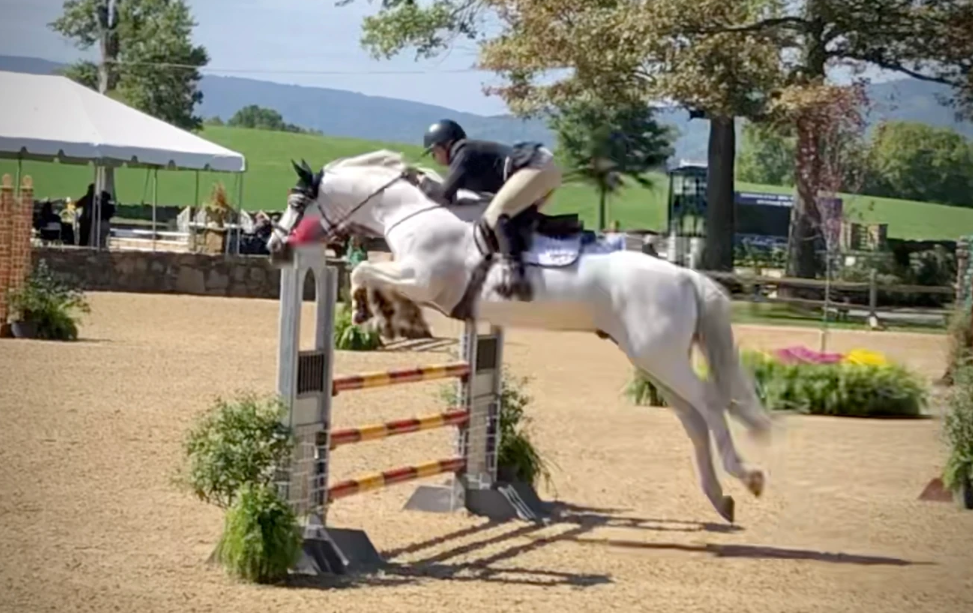
- SC24: Sports Concepts – Hunter Jumper
- Hunter Jumper
- SC24.0 Sports Concepts – Hunter Jumpers
- SC 24.1 HJ Tack and Attire
- SC 24.2 HJ Eligibility & Pony Measurements
- SC 24.3 HJ Equitation Division
- SC 24.4 HJ Pony Hunter Division
- SC 24.5 HJ Children’s/Junior Hunter Division
- SC 24.6 HJ Adult Amateur/Amateur Hunter Division
- SC 24.7 HJ Low/Schooling Hunter
- SC 24.8 HJ Working/Performance Hunter
- SC 24.9 HJ Green Hunter
- SC 24.6 HJ Thoroughbred Hunter
- SC 24.7 HJ Jumper Division
SC24.0 Sports Concepts – Hunter Jumpers
The ESC HJ Rules are intended for use at ESC Sanctioned Hunter/Jumper Competitions. ESC H/J Competitions may be dually sanctioned with other H/J organizations. The prize list of applicant H/J Competitions must be submitted to ESC at least 30 days prior to the horse show date for approval by ESC. Any other sanctioning body must be indicated on the Prize List. The Prize List must specify which divisions or classes are to be sanctioned by ESC and/or any other organization. Shows are not required to offer all of the divisions/classes described in these Rules, and may offer classes not described in these Rules, however, any divisions/classes not described in these Rules will only be sanctioned by ESC at ESC’s sole discretion. Where these specific HJ Rules conflict with any other ESC Rules, the HJ Rules shall govern at ESC H/J Competitions.
The following General Principles apply to H/J Competitions:
- Course Design – Shall typically consist of 8 to 10 jumps for Hunters and 12 -16 jumps for Jumpers. The Hunter and/or Jumper course designer, or their designated representative, must be present at all sessions of a competition and be available to report to the judge at any time that the course is ready in all respects. The Hunter course designer is responsible for the correctness of the course and must give consideration to any suggestions made by the judge. The Jumper course designer is responsible for laying out the course, building the obstacles and for the measurement of the course.
- Hunters – Hunters shall be judged on their suitability, performance, manners, and way of going over fences and under saddle. Three disobediences in an over fences class shall result in elimination. A rider or horse fall over fences or under saddle shall result in elimination. Deviating from the posted course shall result in elimination.
- Jumpers – Jumper classes are scored objectively according to the Table specified for each class. Penalties are four faults for the lowering of any obstacle, four faults for a disobedience, and 1 fault for each second or part of second over the time allowed. Two disobediences shall result in elimination. A rider or horse fall shall result in elimination. Deviating from the posted course shall result in elimination.
- Equitation – Equitation classes are judged on the rider’s ability, form, and skill to allow the horse to perform at its best. Three refusals shall result in elimination. A rider or horse fall shall result in elimination.
SC 24.1 HJ Tack and Attire
A. All riders must wear ASTM/SEI approved helmets at all times while mounted.
B. It is the tradition of the show ring that riders be correctly attired for the class in question and horses properly presented. Formal attire is preferred, but not required, except in Equitation classes. Judges may excuse formal attire in Equitation classes when the welfare of riders is at risk.
C. Safety vests are permitted but not required.
D. Standing martingales are permitted only in over fences classes and only where the height of the fences does not exceed 1.15m. Running martingales are permitted in both hunter and jumper classes at any height.
E. In hunter classes, two ring or three ring bits, gag bits (other than hunter gag bits), and other unconventional bits shall be penalized. Drop, flash & figure eight nosebands are not permitted in hunter classes.
F. Draw reins and German Martingales may only be used when schooling or in jumper classes with no prize money that are offered at 1.15m or below. Ponies may not be ridden by a Junior in draw reins or German martingales at any time. Draw reins are not permitted in hunter classes. No other head set devices (chambon, etc.) are permitted in any class.
G. Protective boots are allowed in jumper and equitation classes only.
H. Competitors are prohibited from using a whip that is longer than 30” (75cm) while in the process of jumping or schooling over fences. A rider may not carry more than one whip. Whips that are weighted at the end are prohibited at any time.
I. Any rider competing with their stirrup, stirrup leather or foot tied and/or secured in any manner, will automatically be eliminated from that class. Riding anywhere on the competition grounds with stirrup, stirrup leather or foot tied or otherwise secured is prohibited.
SC 24.2 HJ Eligibility & Pony Measurements
Horses may be of any breed, height or sex. Stallions may not be shown by juniors (except in Jumper classes) and may not be shown by any exhibitor in Equitation classes. There are height restrictions for pony jumpers detailed below. Exhibitors showing ponies should possess a correctly completed Measuring Certificate for their pony.
SC 24.3 HJ Equitation Division
A. Entries shall not have reached their 18th birthday. Shows are encouraged to offer adult equitation classes for riders who have reached their 18th birthday.
B. In equitation classes only the rider is being judged, therefore any horse suitable for a particular style of riding and capable of performing the required class routine is acceptable. Stallions are prohibited. In Hunter Seat classes, the fall of horse or rider shall eliminate an exhibitor. Any rider not having his mount under sufficient control shall be dismissed from the ring and shall be disqualified from that class. Riders must remain on the same mount throughout all phases of an equitation class until the judge requests a change.
C. Offering of money prizes in Equitation classes is forbidden.
D. Shows may offer equitation divisions based on age, skill level, and/or prior results in equitation classes (e.g., may offer children’s equitation, maiden equitation, short stirrup equitation, etc.).
SC 24.4 HJ Pony Hunter Division
Open to ponies ridden by juniors. Ponies shown in this division may not be shown by an adult in any recognized division at the same horse show. Judged on performance, manners, and way of going. Small ponies (not to exceed 12.2h) to jump 2′, medium ponies (over 12.2h – not to exceed 13.2h) to jump 2’3″ and large ponies (over 13.2h – not to exceed 14.2h) to jump 2’6″. Divisions must be offered split, but if there are not three ponies in either the Small/Medium or Large Pony divisions, the divisions must be combined. Lines less than 72′ must be set on appropriate distances.
SC 24.5 HJ Children’s/Junior Hunter Division
Open to juniors mounted on horses. To be judged on performance, manners, and way of going. Fences 2’6 or 3′. Management may combine this division with the Adult Amateur Hunter division if there are fewer than 3 entries.
SC 24.6 HJ Adult Amateur/Amateur Hunter Division
Open to adult amateur riders mounted on horses or ponies. To be judged on performance, manners, and way of going. Ponies shown by an adult may not be shown in the Pony Hunter division at the same horse show. Fences 2’6 or 3′. Management may combine this division with the Children’s Hunter division if there are fewer than 3 entries.
SC 24.7 HJ Low/Schooling Hunter
Open to horses and ponies. To be judged on performance, manners, and way of going. Fences 2’6 or 3′.
SC 24.8 HJ Working/Performance Hunter
Open to horses. To be judged on performance, manners, and way of going. Classes may be offered with height options but fences may not be lower than 3’0” and may not exceed 3’6”.
SC 24.9 HJ Green Hunter
Open to horses in their first or second year of showing over fences at 2’6” or higher. To be eligible for green hunter status, horses may not have shown over fences 2’6” or higher prior to the current competition year. Fences to be 2’6″ and 3′. Both heights must be offered and judged together.
SC 24.6 HJ Thoroughbred Hunter
Limited to horses who are registered or eligible to be registered with the Jockey Club. To be judged on performance, manners, and way of going. To be shown at 2’6” or 3’ in height. Both heights must be offered and judged together.
SC 24.7 HJ Jumper Division
A. No manual poling and or offsets.
B. Schooling areas for jumpers must have jump equipment to set at least one vertical and one spread jump with safety cups.
C. Jumpers may be of any breed, height, or sex except in a class restricted to ponies. Junior riders may show stallions except in a class restricted to ponies.
D. Classes may be offered for Non-Pro Riders (can be divided by age), Thoroughbreds, Pony, Open, as well as specific Sections or Classes differentiated by specific height. Pony jumpers may not show in classes where the height of the fences exceeds 1.00m.
E. Specifications must be included in prize list on the course plan. This may be shown as either specific height in feet/inches or metric measure or a height range of not more than 5cm or 3” (i.e. 1.10m to 1.15m or 3’7” to 3’9”). If a range is indicated, fence heights may not be lower than the low height specified except the first fence or the first element of a combination. The following fence dimensions are approximate equivalents in metric and English units:
0.70 m = Fences 2’3” in height
0.75 m = Fences 2’5” in height
0.80 m = Fences 2’7” in height
0.85 m = Fences 2’9” in height
0.90 m = Fences 2’11” in height
0.95 m = Fences 3’1” in height
1.00 m = Fences 3’3” in height
1.05 m = Fences 3’5” in height
1.10 m = Fences 3’7” in height
1.15 m = Fences 3’9” in height
1.20 m = Fences 3’11” in height
1.25 m = Fences 4’1” in height
1.30 m = Fences 4’3” in height
1.35 m = Fences 4’5” in height
1.40 m = Fences 4’7” in height
1.45 m = Fences 4’9” in height
1.50 m = Fences 4’11” in height
1.55 m = Fences 5’1” in height
1.60 m = Fences 5’3” in height
F. All obstacles must be numbered. Combination obstacles are those consisting of two or more jumping efforts, as indicated with the letters “A,” “B,” etc. Faults are accrued at all parts of a combination obstacle. Jumps may consist of any of the following: verticals, oxers, triple bars (only in classes where the height is 1.0m or higher), combinations, as well as variations such as liverpools, fans, etc.
G. A start line must be established at least 12’ from the first obstacle and a finish line at least 24’ from the last obstacle, each indicated by two markers at least 12’ apart. There must be at least one change of direction in every course including jump-off courses.
H. No open water jumps or permanent obstacles are permitted.
I. The Time Allowed must be announced and posted prior to the start of the class The Time Allowed may be adjusted on consultation between the judge and the course designer. However, the time allowed may not be adjusted once three competitors have completed the course. Optimum time classes are scored such that the optimum time is defined as 4 seconds less than the Time Allowed.
J. The judge should ensure that the course has been properly set according to specifications indicated in the prize list and that obstacles have been appropriately reset after disruption of any kind during the competition.
K. An audible signal is sounded for the following purposes:
1. to give the signal to start;
2. to stop a competitor for a time-out;
3. to pause the 45-second period which a rider has to begin the course in the event of an unforeseen incident;
4. to signal that a jump needs to be reset before a rider attempts to retake the jump after it has been knocked down during a refusal;
5. to give the signal for a competitor to continue his round after an interruption;
6. to signal elimination; and
7. to signal that the rider should not proceed to the jump-off round in a II2c class;
L. Timing and scoring shall be performed by judges in accordance with HJ 10.600 and the standard manner for recognized jumper competitions. Manual timing is permitted where timing equipment is not available.
M. Except for feature classes (e.g. a Mini-Prix or team format) where other Tables may be utilized, classes should be conducted under the following generally recognized Tables:
1. Table II (Clear Round)
2. Table II.2.1 (Speed)
3. Table II.2.b (Jump-Off—remain in ring after first round)
4. Table II.2.c (Two Phase—may not continue to second phase if faults incurred in first phase)
5. Table II.2.d (Two-Phase—faults scored across both phases; time in second phase breaks ties)
6. Table IV (Optimum Time—four seconds below Time Allowed)