
American Morgan Horse MRG – Show Concepts

 | MRG Horse Show Concepts Section: MRG2.0 Version Control: 7.4 |
ESC
Rule Book
Competition Guidelines for
A Network of
Sanctioned Horse Shows
AUTHORIZED USE
Use of the ESC Rule Book and its concepts is granted by written authorization only to horse shows that join the ESC Network, meet operational guidelines, collect ESC fees, employ ESC-insured officials, uphold the ESC Prohibited List, and enforce the Rule Book. Participants agree to follow these rules by paying fees and signing entry forms. The ESC Rule Book is the intellectual property of Equine Sports Council, Inc. Copyright protects the ESC-developed content, and unauthorized use, reproduction, or transmission is strictly prohibited and unlawful.
MRG1.0 Morgan Horse – Show Concepts
Today, every Morgan horse traces its lineage back to one of Figure’s three famous sons: Bulrush, Sherman, and Woodbury. These remarkable horses transformed the New England horse industry in the 1820s, shaping a breed known for its strength, versatility, and heart.
Though Figure’s exact origins remain a mystery, many believe he was sired by True Briton, a stallion celebrated for his exceptional endurance and power. True Briton could outwalk, outrun, and out-pull any other horse—qualities that live on in every Morgan, capturing the spirit and resilience that so many horse lovers admire.
Origins and “Figure”
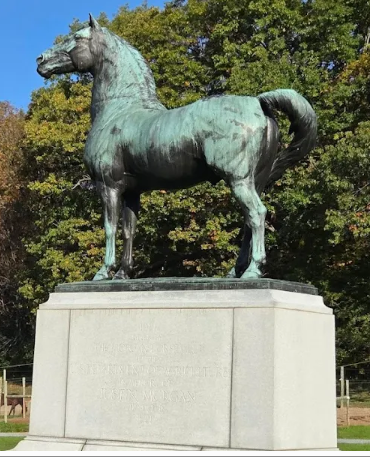
Figure – Morgan Stallion
University of Vermont Statue
- The Founder: The breed traces back to one stallion, Figure, born in 1789. He was owned by Justin Morgan of Randolph, Vermont, in the 1790s.
- Characteristics: Figure was relatively small, but renowned for his incredible strength, speed, and ability to out-pull and out-distance larger horses. He was known for passing these traits to his offspring with remarkable consistency.
- Legacy: Figure lived until 1821, and his offspring became known as “Justin Morgan horses,”
Development and Impact
Military Use: Their stamina made them ideal for the U.S. cavalry, including famous mounts in the Civil War, such as Sheridan’s “Rienzi” and Stonewall Jackson’s “Little Sorrel”.
Versatility: During the 19th century, Morgan’s were the go-to breed for clearing land in New England, hauling freight, and, due to their speed, popular for trotting races.
Modern Era
- Versatility Today: Today, the Morgan is known as a premier, versatile riding horse used in English and Western disciplines, pleasure riding, and show, while maintaining their reputation for intelligence and a good disposition.
- Breed Preservation: The Livestock Conservancy recognizes the “Traditional” Morgan for those that haven’t been outcrossed since 1939.
MRG1.2 Physical Morgan Breed Characteristics
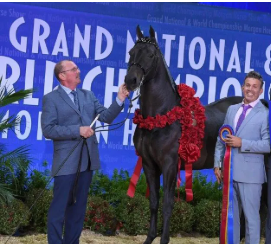
Recent prominent Morgan World Champion mares include Ledgefields Jagged Edge (2024 Park Harness), NS Fame & Fortune (2023), and Dressed Up GCH (2019). Other notable champions and high-achieving mares in recent years include Ledyard Octavia (2017 Senior Mare), the young mare Sing It (2024), and elite producers like CBMF Restless GCH and HVK Obsidian.
Morgan horses are a compact and well-proportioned breed, typically standing between 14.1 and 15.2 hands high, though some may reach 16 hands or taller. They possess a strong, muscular build with a refined head, expressive eyes, and a gracefully arched neck. Their sturdy legs and well-rounded body combine strength and elegance, reflecting their versatility and endurance.
- Build: Morgans possess a refined yet muscular build, characterized by a well-arched neck, sloping shoulders, strong hindquarters, and a deep chest. They have a distinctive head with a broad forehead, expressive eyes, and small, alert ears.
- Coat: Morgans come in a variety of colors, including bay as the dominant color, chestnut, black, and occasionally gray or roan. They may also exhibit pinto patterns. The breed’s coat is typically sleek and glossy, often with a dense mane and tail.
- Movement: Morgans are known for their natural elegance and smooth gaits. They move with energy, grace, and an impressive level of animation, making them well-suited for various disciplines.
- Undesirable conformation traits in a Morgan Horse: a long, weak back (swayed back), short, straight shoulders, a thick throatlatch/neck, a short croup (higher than withers), straight hind limbs (not enough hock flexion), toeing in (pigeon-toed), and unproportional head/ears, all of which hinder balance, power, and natural stride, contrasting with the ideal short back, powerful hindquarters, and balanced proportions.
MRG 1.3 Morgan Horse Show Protocol
Morgan Class Turnout
- Morgan’s are shown in full forelocks, mane, tails, braiding only allowed of the forelock (any division) or of the mane, tail and forelock in the hunter division.
- Morgan’s MAY BE shown with subtle artificial hair in mane or tails. Extreme hair replacement is undesired, however horses are not penalized for artificial hair.
- Morgan’s may have a shaved bridle path, muzzle and ears. The full mane should never be shaved or roached. Fetlocks should be trimmed. Morgan’s may be body clipped.
- Morgan’s are not to be in tail sets on the show grounds, bussels are permitted while stalled. Morgan’s may not be shown in any tail brace or device that alters the tail carriage.
- Morgan’s tail carriage must be natural in appearance, use of chemicals or irritants to alter tail carriage is strictly prohibited. The surgical release of the ventral sacrocaudal muscle is undesired and should be penalized if scarring or unnatural tail carriage is visibly noticed.
- Markings may not be covered
- Stripping of classes is only required at the regional championships, and when 50% or more of the judging is based on conformation. ESC shows must announce in their show’s prize list which classes will be stripped.
Morgan Shoeing Regulations - Maximum hoof length is 5.75 inches for Park, In-Hand and Parade Division (including pads/shoes)
- Maximum hoof length is 5 inches for English, Hunter and Western Pleasure Divisions (including pads/shoes)
- Maximum hoof length is 4.75 inches for Classic Pleasure, full pads permitted
- Only at larger championship shows with 250 or more entries should the Champion and Reserve of the Park, Pleasure and Hunter Open saddle divisions require front feet to be measured. There must be an Elite ESC steward on the ground at time of measurements.
- Unshod horses may be exhibited in any division.
Morgan Prohibited Tack - Tongue ties not allowed in Western, Carriage, Dressage and must result in disqualification
- Prohibited bits Sawtooth bits, twisted wire bits, metal bosals, mechanical hackamores (shanks), war bridles, bumper bits, wire tie-downs.
- Prohibited nosebands Flash, figure-eight, or dropped nosebands unless specifically allowed, like a cavesson.
- Prohibited curb chains or straps wire, rawhide, twists, or anything harsh; must be smooth and flat.
- Standard Snaffle bits permitted in ALL Western Classes, metal single jointed unwrapped mouthpiece 5/16” to ¾” diameter metal. Curb strap may be used with snaffle bits attached below the reins.
- Hackamore specifically bosals are permitted in the Western division for horses 5 years old or younger. Hackamore bosals must be a rounded, flexible, non-metallic core (rawhide/leather), with no metal, glue, or plastic, except for smooth electrical tape.
- Boots are only permitted in roadster, reining, hunter pleasure, trail, over fences
Morgan Required Class Elements - Involuntary dismounts must result in disqualification in the Western and Dressage
- Horses may NOT be asked to back in English Pleasure, Pleasure Driving, Roadster or Hunter Pleasure.
- Horses MUST BACK in the Classic Pleasure Saddle and Classic Pleasure Driving, and Western Pleasure classes.
- Stallions may not be shown by Juveniles or in Ladies Classes, but may be shown in Youth Classes.
- Classes may be divided by height of horse, typically under 15h or over 15.1h. This division of classes is not recommended unless shows provide for an official measurement and protest process in their prize list.
- Horses with labored way of going, unsafe demeanor, or poor cadence that is an animal welfare or human safety issue must be excused from the class.
- Horses with blood in their mouths must be severely penalized, or excused if an animal welfare issue is of concern.
MRG 1.4 Morgan Horse – Gaits Performed
- Flat Walk: A flat-footed, steady gait with elasticity with no anticipation of forward movement
- Park Walk: A lively, collected, energetic walk that remains elastic and travels along a straight path.
- Trot: A two beat diagonal movement that’s balanced, collected gait with a square frame.
- Park Trot: A two beat diagonal movement that’s animated, square, and collected trot that maintains balance.
- Pleasure Trot: A two beat diagonal movement that’s relaxed trot characterized by elasticity and free movement.
- Extended Trot: A two beat diagonal movement that’s bold and energetic, covering more ground with a noticeable lengthening of stride. Speed increases without any appearance of rushing or straining. The horse should stay light in the mouth and respond willingly without resistance. Failure to maintain lightness and willingness should result in penalties.
- Road Trot: A two beat diagonal movement that covers ground with balance; form should never be sacrificed for speed. Excessive speed is subject to penalty.
- Slow or Collected Trot: A two beat diagonal movement that carries its neck high, allowing for increased shoulder mobility in all directions. The hocks remain engaged, generating strong impulsion despite the slower pace. The steps are shorter but exhibit greater lightness and agility.
- Working Trot (carriage division): A two beat diagonal movement that is between a strong and slow trot, more rounded than the strong trot. The horse moves forward freely and straight, with good engagement of the hind legs and lively hock action. The rein remains taut yet light, with a balanced and relaxed posture. Steps should be even, with hind feet landing in the tracks of the forefeet. Energy and impulsion at this gait indicate the horse’s suppleness and balance.
- Strong Trot (also called “Trot On”): A clear but controlled increase in speed and stride length, maintaining good balance and appropriate lateral flexion during turns. The rider should keep a light contact. Excessive speed results in penalties. The command for this gait is “Trot on.”
- Jog (western division): A two beat diagonal movement that’s relaxed, easy, without irregular or mixed steps.
- Extended Jog (western division): The stride is lengthened while keeping a free and easy two-beat diagonal rhythm.
- Canter: A smooth, collected, and straight gait on both leads.
- Lope (western division): A slow, smooth, straight gait with a three-beat rhythm.
- Extended Lope (western division): The stride lengthens while maintaining a smooth, straight, three-beat rhythm. May not be called for in juvenile, novice or maiden classes.
- Extended Canter: This gait covers more ground and remains free-flowing and smooth, showing clear stride lengthening but controlled and polite. Excessive speed will be penalized.
- Hand Gallop (road hack canter): A long, free stride that covers ground with control. It is not a fast, collected canter but rather a genuine stride extension, straight and correct on both leads. Excessive speed is penalized.