American Hackney Pony

ESC Rule Book
Standards & Guidelines
Saddlebred | Hackney | Morgan | Dutch Harness
Roadster | Equitation | Single Bit | Hunter Jumper | Working Ranch | Hunter Hack
ASB Pleasure | ASB Performance

SC2: Sports Concepts – American Hackney Ponies
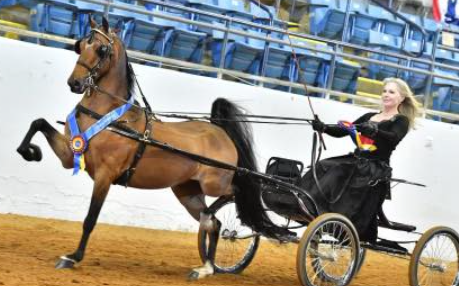
- SC2: Sports Concepts – American Hackney Ponies
- American Hackney Pony
- SC2.1 Eligibility and Type
- SC2.2 Show Protocol
- SC2.3 Tack & Apparel
- SC2.4 Standards of Judging
- SC 2.5 Hackney Pony Class Specifications
- SC2.6 “Long Tail” Harness Pony – Division Specifics
- SC2.7 Hackney Park Pleasure Driving – Division Specifics
- SC2.8 Hackney Pony – Show Pleasure Driving Division Specifics
- SC2.8 Hackney Pony – Country Pleasure Driving Division Specifics
- SC2.9 Hackney Pony – Under Saddle Division Specifics
- SC2.10 Hackney Pony AHHS Youth Medallion Division Specifics
- SC2.11 Hackney Pony – Roadster Division Specifics
- SC2.12 Hackney Pony – Youth Showmanship In-Hand Division Specifics
- SC2.13 Hackney Pony – Breeding Class Division Specifics
- SC2.14 Hackney Pony – Additional Classes
SC2.1 Eligibility and Type
The American Hackney Horse Society (AHHS) and the Canadian Hackney Society (CHS) are the two official registries for Hackney Ponies. Ponies should be entered using their full registered names and registration numbers, under the ownership of those listed with AHHS or CHS.
The Hackney Pony has a dynamic and expressive demeanor. It is admired for its liveliness, stamina, resilience, and inherent gracefulness.
Specifications for Hackney Pony Conformation:
General Appearance:
- The Hackney Pony should give an overall impression of elegance, athleticism, and alertness.
- Proportions should be balanced, with a harmonious blending of parts.
- The body should appear compact yet refined, with clean lines and smooth transitions between muscle groups.
- The head should have an expressive look with a refined muzzle, alert eyes, and well-shaped ears.
Height and Weight:
- The height at withers should range between 12.2 to 14.2 hands.
- Weight should be proportionate to height and body condition, showcasing athleticism and stamina.
Head:
- The head should be well-proportioned to the body.
- The profile should be straight or slightly concave.
- Eyes should be large, bright, and expressive, set wide apart.
- Ears should be well-shaped, alert, and proportionate to the head.
Neck:
- The neck should have a well-arched shape that blends smoothly into the withers and shoulders.
- Its length should be proportionate to the body.
- The neck should be set high while carrying the head proudly.
Shoulders:
- Shoulders should slope to allow freedom of movement.
- They need to be muscular and well-defined while blending smoothly into the body.
Body:
- The back should be short, strong, and well-muscled.
- The chest should be deep and broad, allowing ample room for heart and lung capacity.
- Ribcage should be well-sprung, indicating good lung capacity and stamina.
- The loin should be muscular and slightly arched, connecting the back to the hindquarters seamlessly.
Legs and Feet:
- Legs should be straight, with well-defined joints and strong, clean tendons.
- Forelegs need to be set well under the body to provide balance and support.
- Hindquarters should be powerful, with well-developed muscles for propulsion.
- Hooves should be well-formed, round, and proportionate to the pony’s size.
Movement:
- Movement should be free-flowing, fluid, and ground-covering.
- Stride needs to be long and elastic with noticeable reach and drive.
- Hackney Ponies should move with impulsion, elevation, and style while displaying natural animation and presence.
Coat and Color:
- The coat should have a glossy appearance that reflects good health and condition.
- Acceptable colors include solid black, brown, bay, chestnut or roan. Minimal white markings are allowed.
Overall Impression:
The overall impression of Hackney Ponies should embody gracefulness, elegance, athleticism. They must exude confidence, alertness, and willingness to perform. Their conformation should reflect their heritage as stylish and versatile driving ponies.
Judging penalties are applied for deviation from the Hackney breed standard, which includes features such as a coarse or unrefined head, a Roman nose, drooping ears, small or pig-like eyes, a short, straight, or overly arched neck, a bulky throat latch, flat withers, a swayed or hunched back, straight shoulders, misaligned legs, bowed knees, excessive knee bending, bowed legs, straight pasterns, extreme splaying outward or inward turning of the feet, contracted heels, an overly wide or narrow stance, a sickle-shaped hock, severe cow hocks, inadequate muscle development, undernourishment, excessive weight, a rough coat, or overall poor physical condition.
Horses and ponies must exhibit soundness, free from any signs of lameness or respiratory issues. Recognizing the diversity within the breed, animals fulfilling all other criteria for a specific event or discipline should not face undue penalties. If an entry has lost sight in one eye, it may still be shown. A contact lens is permitted for cosmetic purposes only, not in an effort to enhance performance.
Height regulations for Hackney Ponies and Harness Ponies are strictly enforced, with specific provisions for measurements and divisions in competitions. Ponies must have a current measurement card issued by a governing organization, or be measured at the competition prior to exhibiting. Hackney ponies are restricted to a maximum height of 14.2 hands, while 12.2 hands is the maximum height of Harness ponies. Harness ponies 48 inches and under may be further divided by the competition. The maximum height of Roadster ponies is 52” and the class may be divided for ponies measuring 50 inches and under, and another for those measuring over 50 inches up to 52 inches.
SC2.2 Show Protocol
- Stallions are allowed in all classes except in the Pleasure section and Juvenile classes.
- Maximum number of entries: Classes with 16 or more entries must be divided into two separate sections.
- Excitement Devices – Noise makers, whips >6 feet including lash, tape measures, bamboo sticks, horns, compressed air, laser beams or strobe lights or any similar attention-getting devices are not allowed to be used on the show grounds while classes are in session.
- Animal Welfare: Hackneys must be sound and comfortable enough to perform at their intended use. Ponies showing evidence of lameness or broken wind will be penalized.
- Line Up in Driving: Ponies are not to be lined up head-to-tail in driving classes, and ribbons should be presented from the line-up.
- Gaits & Workouts: Participants must perform in both directions of the ring, demonstrating all required gaits. Workouts will be evaluated as a new class.
- Attendants in Classes: One attendant per pony, suitably attired, will be permitted to stand inside the ring at the gate during the class in Ladies, Amateur, Juvenile, and multiple hitch classes. Attendants must remain quiet and not disrupt any other entry in the class. In Hackney Roadster Pony classes, one attendant is allowed to enter the ring when the ponies line up.
- Status: Ribbons obtained within a specific section do not contribute to determining Maiden/Novice/Limit status if the pony competes in a different Hackney section. However, ribbons earned in the Roadster Pony section of the Roadster Division do factor into the maiden/novice/limit status of Hackney Roadster ponies.
- Shoeing: Pads, wedges, and hoof bands are permitted for the protection of the legs and feet. However, a labored way of going will be penalized.
- Line Up Call: Upon the judge’s request for the line-up, exhibitors are required to continue in the second direction to position their entries in the line-up. Non-compliance will lead to disqualification.
- Tails – Entries can be presented with their tails in a natural, unset state in any class without incurring penalties. The surgical release of the ventral sacrocaudal muscle by a licensed veterinarian is allowed. No entry is allowed to participate in the Hackney Division if any irritant/chemical is used to alter the tail carriage.
- Inhumane Treatment: Ponies displaying indications of inhumane treatment will be disqualified from the competition.
- Hackney Roadster Pony vs Roadster: Ponies competing in Hackney Roadster Pony classes within the Hackney Division may enter Roadster Pony classes within the Roadster Division at the same competition.
- Ladies & Gentlemen Amateur Classes: It is recommended that competition management offer Amateur Ladies and Amateur Gentlemen’s classes qualifying for an Amateur Championship. Both an Amateur Lady and an Amateur Gentleman class must be offered if one of these classes is offered. A Juvenile class is optional.
- UPHA Classics – See https://www.uphaonline.com/
SC2.3 Tack & Apparel
- Vehicles and equipment utilized must be in functional condition. Exhibitors employing vehicles or equipment that disrupt other participants must be asked to leave the ring.
- Entries must be presented without artificial enhancements (such as wired ears, chains, shackles, or draw reins). Permitted: mouth controls, enhancements to the mane and tail, and a tail brace. Leather straps without additional attachments are allowed as action aids in warm-up areas on the competition grounds during or before a competition. Rubber or elastic exercising aids affixed with a fixed ring on a plain leather strap are also permitted. Additionally, a wool or fleece protective covering is allowed. However, the employment of elastic straps or attachments connecting hooves/feet to any portion of the harness/bridle is not permitted. Furthermore, the presence of chains or rollers serving as action aids on the competition premises during or prior to a competition is strictly prohibited.
SC2.4 Standards of Judging
Hackney Pony – Amateurs
To be exhibited by an Amateur handler. Open to mares, stallions, and geldings, these classes allow for a bit more strength and bolder performance. They are expected to exhibit increased action and animation, with less emphasis on manners compared to Ladies or Juvenile cases. Nevertheless, ponies must stand quietly and back promptly. Evaluation criteria for these classes include manners, performance, quality, presence, and conformation.
Hackney Pony – Juvenile
Available to Juvenile exhibitors exhibiting mares or geldings. Manners hold utmost importance, with ponies displaying willingness to perform, suitability, and balanced action. Gait execution should be brilliant upon command, while also standing quietly and backing readily. Stallions are not allowed in Juvenile classes. Judging criteria: manners, suitability, quality, performance, and conformation.
Hackney Pony – Ladies
Available to mares, stallions and geldings. A pony intended for a lady driver should exude refinement and grace, with careful consideration given to the pony’s suitability for the driver. Expression plays a significant role, and high quality is paramount. The execution of gaits should be executed with precision upon command. Additionally, the pony should demonstrate the ability to stand calmly and back up readily. Judging in these classes takes into account manners, quality, suitability, performance, and conformation.
Hackney Pony – 4YO & Under
These entries are stallions, mares and geldings four years of age and under, shown at the Park Trot and Show Your Pony. To be judged on performance, presence, quality, conformation and manners.
Open/Geldings/Mares/Stallions/Limit/Novice/Maiden/Owners/Gentleman
Entries should epitomize the highest standards of the breed, striving for near perfection, displaying all gaits with remarkable presence, brilliance, and exceptional all-around action. Performance takes precedence in these classes, with judging criteria encompassing performance, presence, quality, conformation, and manners. Gaits include Park Trot and Show Your Pony. In all Ladies, Amateur, Juvenile, and Pleasure classes, the judge(s) must walk the lineup.
Hackney Pony – Championships
Championship competitions should be provided for both driving and riding classes. In the event that an amateur ladies’ class is unavailable, amateur ladies participating in the open ladies’ class will automatically qualify for the amateur championship.
Hackney Pony – In-Hand
Open to stallions, mares and geldings of various ages. Show Committees are urged to offer separate classes for stallions, mares, and geldings, two years of age and over.
- Ponies are shown in-hand at a walk and trot, in both directions of the ring. Conformation, type, quality, and finish account for 50% of the score for weanlings, yearlings, two-year-olds, and older ponies. Performance, manners, disposition, and way of going contribute the remaining 50% for all age groups.
- Two-year-old stallions and geldings have the option to be shown in stallion Tack & Apparel. Stallions and geldings over two years old must be shown in stallion Tack & Apparel.
- The first and second-place winners in the qualifying class will be designated as Show Champions and Reserve Champions.
- Inconspicuous hair and/or tail brace are permitted, while a spoon crupper is optional.
- Only two individuals per pony are allowed in the ring. Handlers/attendants must be dressed neatly and appropriately, wearing clean and well-fitted attire. Each person may carry or use a whip not exceeding 6 feet in length, including the lash. The lash must remain unaltered and adhere to standard whip style. An exception is made for small empty paper or plastic bags, or ribbons attached to the whip, which may be used separately.
Hackney Pony – “Cob Tail”
- Hackney ponies are required to have the appearance of a short tail and a tightly braided mane, with exceptions for National and Local In-Hand Futurities.Excessive speed is discouraged in the competition.
- The designated gaits for Hackney Ponies are the “Park Trot,” characterized by a highly collected manner, and the “Show Your Pony” gait, which showcases the pony’s best attributes.
- Any excessive speed will be penalized accordingly.
- Amateur, Ladies, and Juvenile Ponies are exclusively shown at the Park Trot.
- While lined up, ponies may be unchecked except in Ladies, Juvenile, and Amateur classes, where ponies must remain checked. However, adjustments to the checks are permitted.
- In Ladies, Juvenile, and Amateur classes, attendants may initially stand an entry on its feet, after which they must maintain a distance of at least two paces from the head.
- A four-wheeled viceroy is the proper show cart for this division.
- Entries must be severely penalized if not properly bitted in the half cheek.
- “To be driven in the half cheek” means that the reins should go around the post or through the top slot of the bit if it is at least halfway inside the ring.
- Ponies must be shown in an attached sidecheck with round blinkers, using a liverpool bit, unless otherwise specified in the class specifications. A separate sidecheck bit is not necessary.
- Traditional apparel typically include an apron, gloves, and whip. Participants are encouraged to wear appropriate attire.
SC 2.5 Hackney Pony Class Specifications
1. Single Hackney Pony – Amateur to Drive
Available to qualified entries with amateur classifications as follows:
In Amateur, Amateur Owners, Amateur Lady and Amateur Gentleman classes, ponies are required to display all-around action, exclusively at a Park Trot, without exceeding this speed. They must be driven in the half cheek with side checks, exhibiting perfect mouths, standing quietly, and backing easily. Ponies must be checked, although adjustments to the checks are permitted during the lineup. Those remaining in the center of the ring during a workout may be unchecked. This is not a Tack & Apparel class, and judging criteria include manners, performance, presence, quality, and conformation.
2. Single Hackney Pony – Amateur to Drive Championship
To be eligible, ponies must be entered and shown by an amateur in a qualifying class designated by competition management in the prize list. Ponies are to be shown exclusively at a park trot, where they must stand quietly and back easily. Judging criteria include manners, performance, presence, quality, and conformation.
3. Single Hackney Pony – Juvenile
Must be shown by a Juvenile exhibitor. In these classes, horses may consist of mares and geldings only. Manners hold utmost importance, with ponies expected to demonstrate willingness to perform, suitability, and balanced action. They must exhibit all-around action at a Park Trot without exceeding this speed. Additionally, ponies must stand quietly and back easily. Judging criteria encompass manners, presence, quality, performance, and conformation.
Ponies are to be driven in the half cheek with side checks and should appear to have perfect mouths. While ponies must be checked, adjustments to the checks are permissible during the lineup. During a workout, those remaining in the center of the ring may be unchecked.
4. Single Hackney Pony – Juvenile Championship
To be eligible, ponies must be entered, shown, and judged in qualifying classes designated by competition management in the prize list. If no juvenile championship is available, then the entry becomes eligible to show in the Amateur championship. Alternatively, if an amateur championship is not offered, juveniles may compete in an open championship. Ponies are to be shown at a park trot. They must stand quietly in the lineup and back easily. Judging criteria include manners, presence, quality, performance, and conformation.
5. Single Hackney Pony – Ladies
Shown at a park trot. The pony must stand quietly and back readily. To be judged on manners, quality, presence, performance, and conformation.
6 Single Hackney Pony – Ladies Championship
To be eligible ponies must be entered, shown and judged in qualifying class restricted in a similar manner as the championship. Shown at a park trot. The pony should stand quietly and back readily. To be judged on manners, quality, presence, performance, and conformation.
7. Single Hackney Pony – 4YO & Under
Available to entries qualified to exhibit in: SINGLE HACKNEY PONY FOUR YEARS OLD OR UNDER. Open to mares, geldings or stallions. Shown at the park trot and show your pony. To be judged on performance, presence, quality, conformation, and manners.
8. Single Hackney Pony – 4YO & Under Championship
To be eligible, ponies must be entered, shown and judged in any other single performance class in this section To be judged on performance, presence, quality, conformation and manners.
9. Single Hackney Pony
Available to entries qualified to exhibit in: OPEN, MARES, STALLIONS, GELDINGS, MAIDEN, NOVICE, LIMIT, GENTLEMAN AND OWNERS. Shown at a park trot and show your pony. To be judged on performance, presence, quality, conformation and manners.
10. Single Hackney Pony – Championship
To be eligible ponies must be entered, shown and judged in any other single performance class in this section. Shown at a park trot and show your pony. To be judged on performance, presence, quality, conformation and manners.
SC2.6 “Long Tail” Harness Pony – Division Specifics
- Harness ponies should be shown with a long mane and tail.
- Excessive speed can result in penalties.
- The prescribed gaits for Harness Ponies include the “Park Trot,” which should be performed in a highly collected manner, and the “Show Your Pony” gait, which showcases the pony’s best attributes.
- Amateur, Ladies, and Juvenile ponies are exclusively exhibited at the Park Trot.
- Ponies may remain unchecked in the line up, except in Ladies, Juvenile, and Amateur classes, where they must remain checked, with the option to adjust the check.
- In Ladies, Juvenile, and Amateur classes, an attendant may stand the entry on its feet, then move back at least two paces from the head.
- A four-wheeled viceroy is the proper show cart for this division.
- Entries must be severely penalized if not properly bitted in the half cheek.
- “To be driven in the half cheek” means that the reins should go around the post or through the top slot of the bit if it is at least halfway inside the ring.
- Ponies must be shown in an attached sidecheck with round blinkers, using a liverpool bit, unless otherwise specified in the class specifications. A separate sidecheck bit is not necessary.
- Traditional apparel typically include an apron, gloves, and whip. Participants are encouraged to wear appropriate attire.
Harness Pony Class Specifications
1. Harness Pony Amateur
In this class, ponies are expected to demonstrate all-around action at a Park Trot, without exceeding this speed. They must be driven in the half cheek with side checks, appearing to have perfect mouths. Ponies should stand quietly and back easily. While ponies must be checked, adjustments to the checks are permitted during the lineup. During a workout, those remaining in the center of the ring may be unchecked. This is not a Tack & Apparel class. They will be judged on manners, performance, presence, quality, and conformation.
2. Harness Pony Amateur Championship
To be eligible ponies must be entered, shown by an amateur and judged in a qualifying class designated by competition management in the prize list. Shown at a park trot. Ponies must stand quietly and must back easily. To be judged on manners, performance, presence, quality, and conformation.
3. Harness Pony – Juvenile
Juvenile exhibitor drivers may only exhibit mares or geldings. In these classes, manners are of utmost importance. Ponies should demonstrate a willingness to perform and balanced action. They are to be driven in the half cheek with side checks, appearing to have perfect mouths. While ponies must be checked, adjustments to the checks are allowed during the lineup. During a workout, those remaining in the center of the ring may be unchecked. Ponies must exhibit all-around action at a park trot without exceeding this speed. Additionally, they must stand quietly and back easily. Judging criteria include manners, presence, quality, performance, and conformation.
4. Harness Pony – Juvenile Championship
Ponies must be entered, shown, and judged in qualifying classes designated by competition management in the prize list to be eligible. If no juvenile championship is available, then the entry becomes eligible to show in the amateur championship. Alternatively, if an amateur championship is not offered, juveniles may compete in an open championship. Ponies are shown at a park trot. They must stand quietly in the lineup and back easily. Judging criteria include manners, presence, quality, performance, and conformation.
5. Harness Pony – Ladies
Shown exclusively at a Park Trot, these ponies must stand quietly and back readily. Classes are judged on manners, quality, presence, performance, and conformation.
6. Harness Pony – Ladies Championship
To be eligible ponies must be entered, shown and judged in qualifying class restricted in a similar manner as the championship. Shown at a park trot. The pony should stand quietly and back readily. To be judged on manners, quality, presence, performance, and conformation.
7. Harness Pony 4YO & Under
Available to Mares, Geldings or Stallions. Shown at the park trot and show your pony. To be judged on performance, presence, quality, conformation, and manners.
Harness Pony 4YO & Under Championship
Available to Mares, Geldings or Stallions. To be eligible, ponies must be entered, shown and judged in any other single performance class in this section. Shown at the park trot and show your pony. To be judged on performance, presence, quality, conformation and manners.
8. Harness Pony Open
This class is open to entries qualified to show in Limit, Maiden, Novice, Owners, Gentleman, Open, Mares, Stallions and Geldings.. Ponies are to be shown at a park trot and “show your pony” gait. Judging criteria include performance, presence, quality, conformation, and manners.
9. Harness Pony Open Championship
To be eligible, ponies must be entered, shown, and judged in any other single performance class in this section. They are to be shown at a park trot and “show your pony” gait. Judging criteria include performance, presence, quality, conformation, and manners.
SC2.7 Hackney Park Pleasure Driving – Division Specifics
This section is open to Hackney Ponies that are registered and have a height of 14.2 hands or under. Only Mares and Geldings are allowed in this section.
- Professionals, amateurs, and juveniles are all eligible to participate.
- The ponies’ tails can either be long or appear short.
- During the lineup, one attendant without a whip is permitted to head each pony. The attendant can stand the entry on its feet but must then stand at least two paces back from the pony and should only touch it for safety purposes.
- The ponies must stand calmly, back readily, and return to the lineup when required. They should remain checked in the lineup unless an additional workout is called, in which case unchecked ponies may be adjusted.
- The use of artificial appliances or devices such as leather straps and rubber bands is not allowed on the grounds before or during the competition. Any pony found with prohibited equipment will be disqualified from further competition and will lose all entry fees and winnings. However, protective equipment like non-weighted bell boots and shin boots are permitted in the warm-up areas prior to entering the competition ring.
- For all Park Pleasure driving classes, it is necessary for the judge(s) to walk along the lineup. If there is a judging panel present, all judges must adhere to this rule.
- Excessive speed or laboring motion by the ponies may result in penalties. The focus of judging should be on their ability to provide a pleasurable drive while maintaining a show attitude.
- Park Pleasure driving ponies are not eligible to compete in any other section of the Hackney Division at the same competition.
- In terms of tack & apparel, all classes in Park Pleasure can either be Single or Harness. Appropriate harness (black or russet) with a low crupper, sidecheck or overcheck, square or round blinkers, and snaffle bit are required. A martingale is optional, but a checkbit is mandatory.
- Braids on the ponies are allowed.
- Entries must be shown with only the driver and an appropriate vehicle, which can be either a two-wheeled basket-type jog cart or a road bike with a basket. Switches or artificial tails may be added if desired. Appropriate apparel is encouraged for participants.
Park Pleasure Driving Class Specifications
1. Hackney Pony – Park Pleasure Driving
Available to entries qualified to exhibit in the following: Amateur, Gentleman, Juvenile, Ladies, Limit, Novice, Owners, Open, Mares and Geldings. Shown at a flat walk, pleasure trot and road trot. Pleasure and road trot must show differences in speed. To be judged on, manners, presence, performance, suitability, quality, and conformation. Ponies must stand quietly and are required to back.
2. Park Pleasure Driving Championship
Ponies must be entered, shown and judged in qualifying class restricted in a similar manner as the championship. Shown at a flat walk, pleasure trot and road trot (showing a distinct difference in gait). To be judged on manners, presence, performance, suitability, quality and conformation. Ponies must stand quietly and are required to back.
3. Park Pleasure Driving 4YO & Under
Available to entries 4-years of age and under. Shown at a flat walk, pleasure trot and road trot (showing a distinct difference in gait). To be judged on manners, presence, performance, suitability, quality, and conformation. Ponies must stand quietly and are required to back.
SC2.8 Hackney Pony – Show Pleasure Driving Division Specifics
- This section is open to Hackney Ponies that are registered and have a height of 14.2 hands or under. Only Mares and Geldings are allowed in this section.
- Amateurs and juveniles are eligible to participate.
- The ponies’ tails can either be long or appear short.
- During the lineup, one attendant without a whip is permitted to control each pony. The attendant can stand the entry on its feet but must then stand at least two paces back from the pony and should only touch it for safety purposes.
- The ponies must stand calmly, back readily, and return to the lineup when required. They should remain checked in the lineup unless an additional workout is called, in which case unchecked ponies may be adjusted.
- The use of artificial appliances or devices such as leather straps and rubber bands is not allowed on the grounds before or during the competition. Any pony found with prohibited equipment will be disqualified from further competition and will lose all entry fees and winnings. However, protective equipment like non-weighted bell boots and shin boots are permitted in the warm-up areas prior to entering the competition ring.
- In all Show Pleasure driving classes, it is required for the judge(s) to walk through the lineup of ponies.
- Excessive speed and laboring motion will result in penalties. The judge’s focus should be on evaluating each pony’s ability to provide a pleasurable drive while maintaining a showy attitude.
- Show Pleasure Driving ponies are not permitted to compete in any other section of the Hackney Division at the same competition.
- Classes in this division can either single harness or a harness with appropriate black or russet coloration. The harness should include a low crupper, sidecheck or overcheck, square or round blinkers, and a snaffle bit. A martingale is optional, but a checkbit is mandatory.
- Braids are allowed in the ponies’ manes.
- Entries must be shown with only the driver to an appropriate vehicle, which can be either a two-wheeled basket-type jog cart or a road bike with a basket.
- Switches or artificial tails may be discreetly added.
- Participants are encouraged to wear appropriate apparel.
Class Specifications – Hackney Show Pleasure Driving
1. Hackney Pony – Show Pleasure Driving Amateur/Juvenile
Shown at a flat walk, pleasure trot and road trot (showing a distinct difference in gait). To be judged on suitability, manners, performance, quality, and conformation. Ponies must stand quietly and are required to back. Championships, ponies must be entered, shown and judged in a qualifying class with the same specifications.
2. Hackney Pony – Show Pleasure Driving 4YO & Under
Shown at a flat walk, pleasure trot and road trot (showing a distinct difference in gait). Ponies must stand quietly and are required to back. To be judged on suitability, manners, performance, quality and conformation. Championships, ponies must be entered, shown and judged in a qualifying class with the same specifications.
SC2.8 Hackney Pony – Country Pleasure Driving Division Specifics
- This competition is open to registered Hackney Ponies that are 14.2 hands and under. Only mares and geldings are allowed to participate. The tails of the ponies can either be long or have the appearance of being short.
- Both amateurs and juveniles may participate.
- During the lineup, each pony is allowed to have one attendant without a whip. The attendant can stand the pony on its feet and must then stand at least two paces back from the pony. The attendant is not permitted to touch the pony, except for safety purposes. It is important that the ponies stand quietly, back readily, and return to the lineup. Once checked in the lineup, ponies may not be adjusted unless an additional workout is called. If a workout is called, ponies not involved in the workout may be unchecked.
- The use of artificial appliances or devices, such as leather straps and rubber bands, is prohibited on the grounds before or during a competition. Any pony found with prohibited equipment will be disqualified from further competition and will forfeit all entry fees and winnings. However, protective equipment like non-weighted bell boots and shin boots are allowed on the grounds and in warm-up areas before entering the competition ring.
- In all Country Pleasure driving classes, it is required for the judge(s) to walk through the lineup.
- The Country Pleasure driving pony may not be as flashy as a Hackney or Harness Show Pleasure driving pony but should still exhibit typical breed characteristics.
- The ponies must be plain shod, meaning they can have shoes with toe or side clips but not bands, bars, pads, wedges, lead, springs or any attachment that extends below the bottom of the shoe. The sole and entire frog of the foot must be visible. Any pony with prohibited shoeing will be disqualified from further competition at that event.
- Transitions between gaits should be smooth and effortless while maintaining obedience and promptness. A true, flat walk with ground-covering action is emphasized. Entries will be penalized for pulling, head tossing, laboring action, and going sideways.
- Ponies that compete in this section are not eligible to compete in any other section of the Hackney Division at the same competition.
- Regarding tack and apparel, all class specifications can either be Single or Harness. An appropriate harness (black or russet) with a low crupper, sidecheck or overcheck, square or round blinkers, and snaffle bit is required. A martingale is optional but a checkbit is mandatory.
- Entries must be shown with only the driver to an appropriate vehicle, which can be a two-wheeled basket-type jog cart or a road bike with a basket.
- Braids are not allowed but switches or artificial tails may be added.
- Participants are encouraged to wear appropriate apparel.
Hackney Pony Country Pleasure Driving – Class Specifications
1. Country Pleasure Driving Amateur/Juvenile
Shown at a flat walk, pleasure trot, and road trot (showing a distinct difference in gait). Entries must halt on the rail, both directions of the ring. It is imperative that ponies stand quietly and back readily in the lineup. To be judged on manners, presence, performance, suitability, quality, and conformation. Championships, Ponies must be entered, shown and judged in a qualifying class with the same specifications.
2. Country Pleasure Driving 4YO & Under
Shown at a flat walk, pleasure trot, and road trot (showing a distinct difference in gait). Entries must halt on the rail, both directions of the ring. It is imperative that ponies stand quietly and back readily in the lineup. To be judged on manners, presence, performance, suitability, quality, and conformation. Championships, Ponies must be entered, shown and judged in a qualifying class with the same specifications.
SC2.9 Hackney Pony – Under Saddle Division Specifics
- Ponies must be registered mares or geldings and have a height of 14.2 hands or under.
- This division is open to Juveniles.
- Tails can be long or appear short.
- The use of protective headgear is mandatory.
- During the lineup, one attendant without a whip is allowed to head each pony. The attendant may position the entry on its feet and then must stand at least two paces away from the pony and are only permitted to touch the pony for safety purposes. It is crucial for ponies to stand calmly, back up easily, and return to the lineup.
- The use of artificial appliances or devices such as leather straps and rubber bands is prohibited during warmup and competition. Any pony found with prohibited equipment will be disqualified from further competition, forfeiting all entry fees and winnings.
- Protective equipment like non-weighted bell boots, shin boots, etc., are allowed in the warm-up areas before entering the competition ring.
- Each entry in the lineup must be individually assessed by the judge(s).
- Excessive speed and laboring motion will result in penalties. The focus of the judge should be on delivering a pleasant ride while maintaining a show attitude.
- Shown in an English saddle.
- Bridle options include: a snaffle bit, using single or double reins (martingale optional), a full bridle (curb bit and snaffle) or Pelham (without martingale).
- Braids or artificial devices are not permitted.
- Rider attire should consist of dark jodhpurs, shirt, tie, fitted or sweater vests, riding boots, gloves, and hair neatly secured so that the number can be easily read. Riding suits and hats (excluding protective headgear) are not allowed.
1. Hackney Pony – Under Saddle Juvenile – Class Specifications
Exhibitors must be juvenile amateurs. Shown at a flat walk, pleasure trot, and road trot (showing a distinct difference in gait). Entries must stand quietly and back promptly. To be judged on suitability, manners, presence, performance, quality, and conformation. Championship entries must be entered, shown and judged in a qualifying class.
SC2.10 Hackney Pony AHHS Youth Medallion Division Specifics
For more information visit www.hackneysociety.com
- Safety is of utmost importance in all classes, with the primary consideration being the suitability of the exhibitor to the pony/horse and their ability to showcase the Hackney to its full potential.
- In every class, one attendant is permitted and may assist an entry by standing it on its feet, while maintaining a distance of at least two paces from the head. The exception to this is Showmanship In-Hand, where no attendant is allowed.
- Horses are permitted in the AHHS Youth Medallion Pleasure Driving, Pleasure Driving-Reinsmanship, Pleasure Under Saddle, and Showmanship In-Hand classes.
- Juveniles are eligible to participate in these classes. Wearing protective headgear is mandatory.
- To qualify for the National Finals, both the pony/horse and driver/rider must have competed and placed (received a ribbon) in an official AHHS Youth Medallion class.
- AHHS membership is required for riders/drivers to compete in the National Finals.
- The qualifying period for each year ends seven days before the start of the American Saddlebred/Hackney section of the competition hosting the National Finals. At that time, the qualifying period for the following year will commence.
- For permission to offer qualifying AHHS Youth Medallion classes or for more information, please contact the American Hackney Horse Society.
Class Specifications – AHHS Youth Medallion
1. Hackney Pony – Roadster & Under Saddle
To be judged on suitability, manners, presence, performance, speed, quality, and conformation.
2. Show & Country Pleasure Driving
To be judged on suitability, manners, presence, performance, quality and conformation.
3, Pleasure Under Saddle
Shown under English saddle, with an open bridle featuring a snaffle bit with single or double reins. A martingale is optional. Alternatively, a full bridle (curb bit and snaffle) or a Pelham (without martingale) are acceptable. Braids or artificial devices are not allowed.
Rider attire should consist of dark jodhpurs, a shirt, tie, fitted or sweater vests (optional), riding boots, gloves, and hair neatly held back so the number is easily read. Riding suits and hats (other than protective headgear) are prohibited.
Entries are shown at a flat walk, pleasure trot, and a road trot. Ponies must stand quietly and are required to back in the lineup. Judging criteria include suitability, manners, presence, performance, quality, and conformation.
4. Pleasure Driving Reinsman ship
Entries in this class are shown to an appropriate two-wheel vehicle, both ways of the ring, at a walk, slow trot, working trot, and strong trot. A workout will be required and performed at any of the above gaits requested by the judge. The entry will be asked to perform a figure of eight and/or any other appropriate test. The ability and skill of the driver will be considered.
Judging will be based on the following criteria:
- 70% on suitability, manners, presence, performance, quality, and conformation (with 50% from rail work and 50% from the workout)
- 20% on the condition and fit of the harness and vehicle
- 10% on the neatness of attire.
Tests that may be used include but are not limited to: [here, specific tests or maneuvers that may be included in the class can be:
- Figure of eight.
- Serpentine with cone markers.
- Drive between two parallel cavaletti
- Right or left turn through cone makers.
- Execute a back between two (2) cones or cavaletti.
5. Showmanship In-Hand
To be judged on suitability, manners, presence, performance, quality, and conformation.
SC2.11 Hackney Pony – Roadster Division Specifics
For entries in Roadster Pony classes, the following requirements apply:
Ponies must be registered with either the American or Canadian Hackney Societies.
- If there is only one section available for Roadster Ponies to Bike, it should be designated for ponies that are 52 inches in height or less. However, if there are enough entries, two sections may be offered: one for Roadster Ponies to Bike measuring 50 inches and under, and another for those measuring over 50 inches up to 52 inches. If two sections are provided, the competition organizers may also offer a championship or stake event for each section.
- For Roadster Ponies Under Saddle and Roadster Ponies to Wagon classes, participation is limited to ponies that are 54 inches or under in height. In order to compete in the Roadster performance class, ponies must have their measurements verified.
- Roadster Ponies should appear to have a long mane and tail.
- Drivers/riders must wear Roadster Silks, a cap or protective headgear. The exhibitor’s number should be worn on the back of the driver. Juvenile Roadster Pony classes require the use of protective headgear.
- In driving classes, ponies must be driven with a roadster cart (bike). The following equipment should be used: a low crupper, an overcheck rein, square blinkers, and either a straight or broken snaffle bit. Martingales are mandatory and protective boots are allowed.
- In under saddle classes, ponies must be ridden with an English saddle while using a full martingale and an open bridle with a snaffle bit. The reins can be either single or double. Protective boots should also be worn by the pony in these classes.
Show Protocol – Hackney Roadster Pony
- In the ring, ponies should enter in a clockwise direction at a jog-trot and then demonstrate the road gait. They should then turn counterclockwise at a jog-trot, show the road gait again, and finally trot at speed. Throughout all speeds, it is important for ponies to maintain proper form.
- The Hackney Roadster Pony should exhibit animation, brilliance, and competition ring presence while working at a jog-trot or road gait. When asked to increase speed, the pony must show both speed and proper form. Penalties will be given for improper cadence of the trot, hesitation in hock action, or if mixed-gaited ponies racking or breaking into a run during turns.
- Ponies should always stay on the rail unless passing and when turning corners they should go to the far end without leaning. They should have light mouths, be responsive to commands at any time, and display willingness to stand when being judged in the center of the ring.
- Performance at all three gaits is highly important and if there is a workout required, chosen entries must be worked both ways as in the original routine.
- In Open classes where ponies are lined up, no attendant is allowed and the driver must not leave their vehicle. However, they may uncheck their pony when left in the center of the ring during a workout.
- In Juvenile or Amateur Roadster Pony classes, when ponies are lined up, one attendant is permitted to enter the ring and head their entry.. Attendants can hold the pony, but must release the pony when judges approach for inspection. The pony must remain checked and any adjustment of overcheck – such as moving to a string or lengthening – is prohibited and will lead to elimination.
- During a workout in Juvenile or Amateur Roadster Pony classes, an attendant can be present in the ring for entries not participating in the workout. The attendant may uncheck and hold the entry during the workout, but after the workout is over, the pony must be checked again.
- Each exhibitor is only allowed to request a time-out once per class.
- If there are 16 or more entries in a class, it is required to divide the class into separate sections by selecting every other number on the list of entries. Each section will have separate prize money and ribbons.
- Classes may be divided by sex, with stallions not permitted in Juvenile classes.
- It is recommended that Amateur, Juvenile, or Ladies classes also be divided based on age of driver or sex of pony if there are a large number of anticipated entries.
- For Juveniles, it is recommended to divide classes based on age of driver and offer a Juvenile Championship competition. If no Juvenile Championship is offered, ponies shown in Juvenile classes are eligible for the Amateur Championship. If an Amateur Championship is not offered, ponies shown in Juvenile classes are eligible for the Open Championship.
- Juveniles are allowed to participate in Open Hackney Roadster Pony to Wagon classes and Amateur or Open Roadster Pony to Bike classes if there are no Juvenile Amateur classes available. In these classes, Juveniles must wear protective headgear.
Class Specifications – Hackney Roadster Pony
1. Roadster Pony – Amateur to Bike
Available to qualified juvenile or amateur exhibitors. Shown first at the jog-trot and road gait then reversed and shown at a jog-trot, road gait and then speed. To be judged on manners, performance, speed, presence, quality, and conformation. Championships, Ponies must be entered, shown by a Juvenile, Amateur or Lady and judged in a qualifying class designated by competition management in the prize list.
2. Roadster Pony – Juvenile/Ladies to Bike
Available to qualified juvenile amateur or Lady. Shown first at the jog-trot and road gait then reversed and shown at a jog-trot, road gait and then speed. To be judged on manners, presence, quality, performance, speed, and conformation. Championships, ponies must be entered, shown by a Juvenile, Amateur or Lady and judged in a qualifying class designated by competition management in the prize list.
3. Juvenile Roadster Under Saddle
Available to qualified juvenile amateur exhibitors, mounted on a pony 54 inches or less. Shown first at the jog-trot and road gait then reversed and shown at a jog-trot, road gait and then speed. To be judged on manners, performance, speed, presence, quality, and conformation. Saddle classes qualify for saddle championships only.
4. Roadster 4YO & Under to Bike
Available to qualified entries within categories: OPEN, LIMIT, NOVICE, JUNIOR. Shown first at the jog-trot and road gait then reversed and shown at a jog-trot, road gait and then speed. To be judged on performance, speed, presence, quality, conformation and manners. Championships, Ponies must be entered, shown and judged in another class in harness in this section.
5. Roadster Pony to Wagon
Available to qualified ponies that measure 54 inches and under. Shown first at the jog-trot and road gait then reversed and shown at a jog-trot, road gait and then speed. To be judged on performance, speed, presence, quality, manners, and conformation. Exhibitors shall wear a business suit with a hat of choice. Breeching is required in all wagon classes. If no championship is offered for this class it shall be considered as a qualifying class for the Hackney Roadster to Bike Championship as long as the pony qualifies under the Hackney Roadster to Bike height restrictions
6. Roadster Pony Combination
- Ponies must be shown by the same exhibitor, both driving and riding.
- Ponies are first shown in both directions of the ring as a Roadster pony to bike.
- Competitors will then be called to the lineup, ponies unhooked and saddled, and returned to the rail.
- Ponies are shown under saddle at the required gaits after being unhooked and saddled.
- Two attendants per pony are allowed to assist with the changing of Tack & Apparel. If the bridle is changed, the harness bridle must not be removed prior to the pony being completely unhooked from the bike.
- In both segments of the class, ponies are shown first at a jog-trot and road gait, then reversed and shown at a jog-trot, road gait, and then at speed.
- Roadster Pony to Bike is judged on suitability, manners, performance, speed, and quality.
- Roadster Pony Under Saddle is judged on manners, performance, speed, presence, quality, and suitability of the rider to the pony.
SC2.12 Hackney Pony – Youth Showmanship
In-Hand Division Specifics
- Entries are required to enter the ring at the specified gait and follow the direction indicated by the ringmaster until instructed to line up for inspection. A minimum distance of ten feet should be maintained between entries while circling the ring and during the line-up.
- The pony or horse must stand squarely, with weight evenly distributed on all four feet, hooves facing forward, and front legs perpendicular to the ground. Handlers can adjust the position of the pony’s or horse’s feet by gently pulling or pushing on the lead rein, and they may place a hand on the shoulder to exert pressure if necessary. Using a foot or whip to move the pony’s or horse’s feet will result in penalties.
- To present a clear view to the judge, handlers should position themselves in front of the pony or horse, being careful not to obstruct the judge’s sight. They should remain focused on both the pony or horse and the judge, avoiding distractions from outside of the ring.
- The lead shank or rein should be held in the right hand, approximately 12 to 24 inches from the halter or bit, with the other end neatly held in the left hand. Handlers are allowed to switch hands if it helps with positioning or showing off the pony or horse.
- Handlers should have a well-balanced body posture that allows for free movement and proper presentation of the entry. Smooth movement and maintaining a flexible position are critical.
- When the judge is inspecting another entry or down the line, the handler should stand at the pony’s/horse’s head on the opposite side of the judge whenever possible. They should promptly and sharply follow instructions and are allowed to adjust or mildly correct the pony/horse as needed.
Tack & Apparel
- Weanling: Weanlings must be presented in a leather halter of show quality with a matching lead. The use of any bits on weanlings is prohibited.
- Yearling: Yearlings may be presented in either a leather halter of show quality or a snaffle bridle with a matching lead. The use of curb bits on yearlings is prohibited.
- Two-Year-Olds & Older: Two-year-olds and older ponies/horses may be presented in a double show bridle or a curb bit. If a double bridle is used, the snaffle rein may be removed, and if not removed, it should be placed over the pony’s/horse’s withers. The presentation should be made with the curb rein only.
- Whips: Only a riding whip is permitted for use, but no appendages such as plastic or ribbons may be attached. No other attention getting devices or appliances are allowed.
- Attire: Correct attire includes neat dark slacks (optional jodhpurs), a light-colored shirt, tie, and gloves. Vests are optional. Protective headgear is permitted. Clothes and the exhibitor’s person should be neat and clean.
Workouts – Hackney Pony – Youth Showmanship In-Hand
The standard procedure for the mandatory individual workout in showmanship classes is as follows:
- The handler should position themselves to the left of the pony/horse and begin by leading them on a loose rein. If necessary, a gentle use of the whip is allowed. The pony/horse should move forward briskly and in a straight line. When moving away from the judge, they should maintain alignment with the judge for proper observation. At each end of the line, the pony/horse must come to a complete stop before making a right turn away from the handler.
- While the judge is observing other ponies/horses, it is expected that the pony/horse stands reasonably well-posed. The handler should maintain an alert demeanor and demonstrate good showmanship until the entire class has been evaluated and the judge has submitted their evaluation card.
- Handlers are advised to act naturally and avoid excessive showing off, fussing or maneuvering. They should promptly respond to any requests from the judge or other officials, while always displaying courtesy and good sportsmanship.
- There are several actions that may result in penalties including incorrect or unclean attire, poorly groomed or trimmed ponies/horses, incorrect or dirty equipment (such as keepers out or twisted cheek pieces), excessive use of whips or reins, interfering with other exhibitors, overcoaching from outside of the ring, assuming exaggerated, stiff or rigid positions, and failure to follow instructions.
SC2.13 Hackney Pony – Breeding Class Division Specifics
Open to stallions, mares and geldings of various ages, registered with the American or Canadian Hackney Horse Societies. Show Committees are urged to offer separate classes for stallions, mares and geldings, two years of age and over.
Here are the guidelines for showing horses in-hand:
- Showing Procedure: Ponies are shown in-hand at a walk and trot. Conformation, type, quality, and finish count for 50% of the score for weanlings, yearlings, two-year-olds, and older ponies. Performance, manners, disposition, and way of going count for the remaining 50%.
- Stallion Tack & Apparel: Two-year-old stallions and geldings may be shown in stallion Tack & Apparel. Stallions and geldings over two years old must be shown in stallion Tack & Apparel.
- Championship Awards: The Championship and Reserve Championship will be awarded to horses that have placed first or second in their qualifying classes.
- Hair and Tail Brace: Inconspicuous hair and/or tail braces are permitted. A spoon crupper is optional.
- Number of Handlers: Only two people per pony are permitted in the ring. Handlers and attendants must be neatly and appropriately dressed in clean and well-fitted clothes. Each may carry or use a whip not exceeding 6’, including the lash, which must be a standard whip of suitable style. Exception: A small empty paper bag, a small empty plastic bag, or ribbons may be attached to the whip, and the small empty bag may be used separately.
SC2.14 Hackney Pony – Additional Classes
1. Hackney Pony – Gig Class
The ‘Park Gate’ gig or ‘Stanhope’ gig are the two most commonly used in this division. Entries should be shown with a short unbraided mane and with a standing martingale. Shown at an animated walk, park trot and smart trot. To be judged on performance, presence, conformation and manners.
2. Hackney Pony – Harness or Carriage
- Eligibility: Hackneys must be registered and shall not cross-enter into any Hackney, Harness, or Roadster Pony performance class at the same competition.
- Tail Appearance: Tails may be long or have the appearance of being short.
- Harness and Carriage: Harness must be appropriate for the carriage used.
- Showing Procedure: Ponies are shown to an appropriate two or four-wheeled carriage at a walk, collected trot, and extended trot. Excessive speed is to be penalized. Ponies shall stand quietly in the line up and quietly and back promptly.
- Figure Eight: At least one figure eight may be performed at the discretion of the judge.
- Braids: Button braids are permitted.
- Attire and Equipment: Hat, apron, gloves, and whip are required.
- Judging Criteria: Ponies are judged 75% on performance, quality, manners, and conformation; 25% on turnout.
3. Hackney Pony – Pair or Harness Open
Shown to a suitable four wheeled vehicle with side checks. Shown at a park trot and show your ponies. To be judged on performance, quality, similarity, manners, and conformation.