Controlled Medications

Controlled Medications Library
Search All Medications
ESC Medication Library
Search medications, symptoms, interactions and contraindications.
Med Report
Submit a Medication Report through the ESC vet and agent portal.
Drug Classifications
ESC Drug Classifications
Class A – Generally Controlled, Therapeutics – These medications are considered necessary by the equine industry to manage the health and well-being of competition horses. ESC permits the use of these therapies while competing, with some medications requiring no withdrawal. Med Forms are not required for Class A medications unless the published Withdrawal Time is greater than 24 hours. In the event of an illness or injury, Vets may file a med report and adjust the withdrawal time according to the plasma half-life of the medication.
These therapies include NSAIDS such as Bute, Banamine and Equioxx; Acetaminophen (Tylenol), which may be combined with NSAIDS and will not cause GI issues; corticosterioids, including hock and SI injectables; hormone therapies such as Regu-mate and Depo Provera; eye and cornea abrasion medications; topical analgesics such as Surpass, and H1 antihistamines such as Cetirizine Hydrochloride.
Class A
Low Infraction, up to $3000, up to 30 day suspension, DQ possible
B. Strictly Controlled – Performance Enhancing – These medications have the potential to enhance performance based on use, especially if used in combination with other drugs. If no published Withdrawal Time is available, the prescribing Vet must calculate the withdrawal time, ensuring that no traceable amounts are present at the time of competition. In most cases that is .05 ng/mL or 50 picograms/mL. Med reports are required at the time of administration, and should be submitted by the Vet if withdrawal times are being adjusted or calculated.
Substances in Class B include some NSAIDS and corticosteroids, bronchial dilators, masking agents such as diuretics, and medications that affect the central nervous system and/or cardio/pulmonary.
Class B
Medium Infraction, up to $5000, up to 60 day suspension, DQ possible
C. Strictly Controlled – Restricted – These medications may be performance enhancing or subject to abuse. However, in some instances, they may be medically necessary for the horse. These medications must clear the horse’s system before competition. If there is not a published Withdrawal Time, the Vet must calculate the withdrawal time and submit the Med Form, ensuring that no traceable amounts are present at the time of competition. In most circumstances that is below lowest detectable levels of .05 ng/mL or 50 picograms/mL.
If there is a published Withdrawal Time, the Agent/Trainer may submit the Med Form for Class C medications, which includes some opioids, sedatives (such as Acepromazine, Dormosedan and other short-life tranquilizers used for Ship/Clip purposes). Tri-Hist, Albuterol, Clenbuterol and other similar medications with stimulant ingredients must be prescribed by a Vet. Caution should be used with any oral medications in Class C, as dosage is difficult to control.
C. Strictly Controlled – BANNED – These substances are performance enhancing and typically have illicit values or are illegal by local and federal governments. ESC may be required by law in some states to report those testing positive to the authorities.
Class C
Severe Infraction Penalty, up to $10,000, 1YR Suspension, DQ Possible
Any person incurring more than 1 infraction is subject to 1.5 times penalty for each occurrence.
Severe Contraindications
SEVERE CONTRAINDICTATIONS
The welfare of the horse is of the utmost importance and veterinarians should treat as needed during a medical emergency. Below are drug combinations that can present severe health risks including death for the horse and have contraindications issued by the drug manufacturer. ESC does not permit these drug combinations unless medically necessary, and in those cases, a licensed vet must diagnose, prescribe, administer and submit an ESC medication report within an hour of administration.
1. Non-Steroidal Anti-Inflammatory Drugs (NSAIDs)
Combining any of these specific NSAIDs is strictly prohibited and causes severe breakdown of the stomach lining, gastric ulcers, and potential renal failure. [1] ESC requires a 48 hour washout period if switching between these NSAIDS.
- Phenylbutazone (Bute)
- Flunixin meglumine (Banamine)
- Firocoxib (Equioxx) [1, 2]
- Ketoprofen (Ketofen) [1, 2]
2. Corticosteroids
Combining these powerful anti-inflammatories spikes the systemic risk of laminitis, severe immune suppression, and muscle wasting. ESC requires a 7 day washout period if its required to switch between these Corticosteroids.
- Dexamethasone
- Triamcinolone acetonide (Vetalog)
- Betamethasone (Betavet)
- Methylprednisolone acetate (Depo-Medrol)
- Isoflupredone acetate
3. Sedatives, Tranquilizers, and Alpha-2 Agonists
Combining these medications without exact, real-time veterinary calculations triggers additive central nervous system and cardiorespiratory depression, leading to dangerously low heart rates and profound ataxia. ESC requires 72 hour washout period when switching between these medications.
- Detomidine (Dormosedan)
- Xylazine (Rompun)
- Romifidine (Sedivet)
- Acepromazine
5. Bronchodilators & Cardiac Interacting Drugs
Careful monitoring is required when administering respiratory treatments, as they cannot be freely combined with other autonomic nervous system medications without triggering severe cardiac stress or muscle tremors. [1] ESC requires a 72 hour washout period if switching between these medications.
- Albuterol [1]
- Clenbuterol (Ventipulmin)
Performance Enhancing Values
PERFORMANCE ENHANCING
Shared Framework: The ARCI, WADA (founded in the 1970s), and HISA (reporting to the FTC) use highly similar drug classifications.
Classification Criteria: Substances like stimulants, depressants, and tranquilizers are categorized by how their pharmacological effects impact a horse’s performance. [1, 2]
ARCI as the Gold Standard: The ARCI holds the most established controlled medication policy due to its extensive medical research documentation and official laboratory certification.
ESC aligns with medical governing bodies to classify the following drug categories as performance-enhancing, displayed from least to most impactful.
Requirements for veterinarians and agents:
Avoid use: Unless medically necessary, avoid use of performance enhancing substances or combining medications from the same Drug Types when severe Contraindications are present.
Manage clearance: If medically necessary, use precise dosing and withdrawal times so the drug clears the system before competing. Medications that are Performance Enhancing, Potentially Performance Enhancing or pose severe contraindications must clear the horse’s system and require extended withdraw times (typically 2.5 times).
File reporting: Submit an ESC Medication Report immediately at the time of administration.
| Drug Category | Pharmacological Action | Impact on Performance |
|---|---|---|
| Corticosteroids (single use) Low Infraction | Primarily used as an anti inflammatory or arthritic pain management, used in injecting hocks and SI for lower back pain | Improves cadence after reducing inflammation, assists in management of arthritis. Lowest level impact on performance, therapeutic in most circumstances. |
| Bronchodilators (single use) Medium Infraction | Relax and dilate the smooth muscles of the airways (e.g., Clenbuterol). | Improves “wind” by reducing airway resistance, allowing for increased oxygen delivery. |
| Alkalinizing Agents (single use) Medium Infraction | Buffers (like “milkshakes”) that neutralize lactic acid buildup in the blood. | Delays the onset of fatigue by preventing muscle acidosis during high-intensity effort. |
| Diuretics (single use) Medium Infraction | Force the kidneys to expel water and sodium, reducing fluid volume (e.g., Furosemide/Lasix). | Prevents lung bleeding (EIPH) and reduces fluid weight for a lighter race load; can also mask other drugs. |
| Beta 2 Antagonists (single use) Medium Infraction | Act on beta-receptors to relax bronchial muscles; can also have secondary stimulant or anabolic effects. | Aids respiratory efficiency and, in some cases, increases muscle to fat ratios. |
| Stimulants (single use) Severe Infraction | Increase excitation and euphoria by stimulating the central nervous, cardiovascular, and respiratory systems. | Increases speed, energy, and work production; helps a horse run harder and faster. |
| Anabolic Steroids Severe Infraction | Synthetic derivatives of testosterone that promote skeletal muscle growth (anabolic) and male characteristics (androgenic). | Improves muscular strength and aggressiveness; aids in rapid tissue repair. |
| Narcotic Analgesics Severe Infraction | Potent pain killers (e.g., Morphine, Opioids) that act on the central nervous system. | Allows a horse to ignore pain and perform past its natural physical limits. |
Calculating Withdrawal
Calculating Appropriate Withdrawal Time
Multiplying a medication’s plasma half-life by 5 (t1/2 x 5) will determine a safe withdrawal time for most Class A therapeutic medications. After that time, 94–96% of the substance will have been processed by the horse’s system.
Class B and Class C medications are potentially performance enhancing. As such, withdrawal times should be calculated to ensure that no detectable traces of the medication remaining in the horse’s system (below .05 ng/mL.) Your veterinarian will need to establish the correct withdrawal times based on strength, route and overall health of the horse. It may be necessary to extend the withdrawal beyond the standard half-life calculation.
ESC subscribes to an efficacy-based approach for the use of controlled medications. Trotting Breeds are judged on many factors, with quality and conformation often accounting for 50% of the judging standards — qualities that cannot be influenced by medication. Many medications remain detectable for weeks or months beyond their efficacy. Caffeine, for example, is detectable for up to 18 days; however, as many of us know, its effectiveness wears off in just 2–5 hours.
Two other useful calculations are Cmax and Tmax. When a medication reaches its peak effectiveness, the “Concentration Maximum” (Cmax) indicates the highest levels that should be present; anything above this typically indicates overdosing or an insufficient withdrawal period. Knowing the “Time to Maximum Effectiveness” (Tmax) indicates how long a drug takes to reach its peak. For instance, to get the full advantage of Equioxx, its Tmax is 4 hours, at which point it is at maximum effectiveness.
Keep in mind that with oral medications, it is difficult to ensure the correct dosage was consumed. Many medications can be re-ingested orally through contaminated hay or waste. These factors can occasionally cause concentration overages at the time of drug testing.
Veterinarian Access
VETERNARIAN ACCESS
As an equine veterinarian prescriber of controlled medications at an ESC sanctioned event you must be licensed by the state where the show is being held.
Registration
To register, simply provide your practice name, address and phone number and states licensed to practice equine veterinarian medicine.
Support & Inquiries
Emergency & Validation Line: Call 1-855-378-4631 (Option 1) to validate withdrawal adjustments, check permitted concentration levels, or submit reports for withdrawal adjustments and exceptions.
Drug Testing Procedure
Drug Testing Procedure
The ESC Vet is responsible for completing the process below for each entry randomly selected for drug testing. The ESC Vet or Vet Assistant will provide a Drug Testing Information Card to the Agent/Trainer associated with the entry that has been selected. This card provides the Unique Animal Identifier linked to the plasma sample.

Equine Sports Council
ESC Drug Sample Collection Process
Phone: 1-855-Equine1
Email: info@EquineSportsCouncil.org
Web: EquineSportsCouncil.org
| STEPS | RESULTS |
| Step 1 – ESC Requirements of Testing Lab | ESC requires the drug testing lab to have operated successfully for at least 5 years under ISO controls and continually maintain laboratory accreditations for ISO 17025 (A2LA) Competitions Animal Drug Abuse Testing and ARCI accreditation. |
| Step 2 – ESC Requirements of Contract Vet | ESC requires that the contracting Vet be licensed in the state where the show is being held and specialize in Equine Practices. He/She must carry medical malpractice insurance and successfully pass a criminal background check. The ESC Vet may only perform sample collection on the show grounds and should not give drug administration advice or treat any horse on the show grounds. |
| Step 3 – A&B Drug Testing Kits |  Each Drug Testing Kit contains A and B Sample Collection supplies: two hazard bags, three red top vacutainers, one product sealed needle, three security tape strips, sterile gloves and alcohol swabs. |
| Step 4 – Vacutainer & Security Tape Labeling |  A total of three red vacutainers must be filled to 70% with blood. Two vacutainers are designated as “A Samples” and one vacutainer is designated as “B Sample”. All labeling must be completed by the vet and verified by the Agent or designated Proxy/Witness. The Red Security Tape goes over the vacutainer top and down the backside of the vile and should NOT cover the vile’s label. The vacutainer tubes and security tape should be labeled as follows: Vacutainers Labels Animal ID Designate A or B + ESC Security Tape Labels Date Vet’s Initials |
| Step 5 – Chain of Custody | The ESC contracted Vet or Vet Assistant uses ESC’s Chain of Custody software to log the sample collection. Security measures have been taken to track the IP address, geo location and amount of time it takes to complete the Chain of Custody form. Names of the entry, witness, owner or agent are NOT provided to the lab. ESC’s Chain of Custody begins with the Vet or Vet Assistant notifying an entry at the show ring exit gate that they have been selected for random drug testing. Veterinarian arrives at the stall and the entry’s breed/gender/age is recorded. Testing Kits are opened and labeled with the Unique Animal ID number in the presence of the Witness. The trainer/agent/proxy holds the horse for the Vet to perform the blood draw for two (2) A-sample tubes and one (1) B-sample tube. (If the Trainer prefers the blood be drawn by him/herself or another Vet, that is allowed as long as it does not delay the collection process.) The witness will attest to the blood draw, labeling, bagging and secure storage of the samples by signing the Chain of Custody form. (The witness is there to ensure the process is being followed correctly. He/She is not accepting any responsibility for the results of the testing.) The sample is entered into an electronic log and automatic emails are sent to the witness and the ISO certified Testing Lab. Agent/Owners that do not provide quick and unfettered access to the horse for drug testing, refuse to hold the horse for blood draws or when drug testing attempts fail, the ESC Vet must complete an Incident Report which may result in penalties to the Agent/Owner. |
| Step 6 – Hematoma Occurrence | While rare, horses may jump or move during a blood draw causing the development of a hematoma from the needle injection. The ESC vet should remove the needle and apply bandages and pressure until the show vet arrives. The ESC vet may not prescribe treatment of the hematoma, and must move onto the next horse to be tested when the show vet arrives. ESC and Horse Show Management are not responsible for any costs associated with hematoma occurrences or treatments. The ESC Vet must complete an Incident Report when this occurs. |
| Step 7 – Daily Sample & Shipping Logs | Daily Sample and Shipping logs collect only the data required by the testing lab and include the Animal ID Number, Date Collected, Breed, Age and Weight. Logs are electronically generated upon completion of the Chain of Custody form. These logs are available to Show Management, the Lab, ESC and the testing Vet. |
| Step 8 – Storage, Packaging & Shipping | Samples remain in the possession of the ESC Vet, securely cold stored and then batched and shipped overnight or hand delivered to the Drug Testing Lab. |
EULA Agreement
End-User License Agreement (EULA) for Use of the Equine Sport Council’s Controlled Medications Database
- Acceptance of Terms
By accessing or using the Equine Sport Council’s (ESC) Controlled Medications (“Database”), you agree to be bound by this End-User License Agreement (“Agreement”). - Disclaimer of Accuracy
The Database content is compiled from commercially available sources. ESC does not guarantee the accuracy, completeness, or reliability of the information provided. Users acknowledge that the Database is for reference purposes only. - Use Restrictions
The information in the Database is not intended to diagnose, treat, or prescribe medications for any animals. All dosing instructions are generally based on a 1000 pound (approximately 453 kg) horse unless otherwise specified. Dosages expressed in mg (milligrams) or mcg (micrograms) per kg (kilogram) refer to the weight of the horse or dosing per 100 or 1000 pounds accordingly. - Veterinary Oversight
All medications administered at ESC-sanctioned events must be prescribed by a licensed veterinarian. Veterinarians should use the Database solely as a tool to help determine appropriate withdrawal times prior to competition. - Withdrawal and Safety
Non-therapeutic Medications must clear the horse’s system before competition. Ensuring plasma concentration levels are below the lowest level of detection (LOD) is the most conservative and recommended approach to withdrawal. The health and safety of the horse take precedence over performance considerations. - Dynamic Database
The ESC Controlled Medications Database is a dynamic, adaptive resource, allowing for updates to reflect current industry changes and evolving circumstances. Maintenance of the Controlled Medications database occurs at least 30 days prior to an ESC drug testing event. - Limitation of Liability
To the fullest extent permitted by law, ESC shall not be liable for any damages arising out of or related to the use or inability to use the Database, including but not limited to injury or harm to animals. - Governing Law
This Agreement shall be governed by and construed in accordance with the laws applicable to the ESC jurisdiction.
By using the Database, you acknowledge that you have read and agree to the above

ESC Launches Medication Library
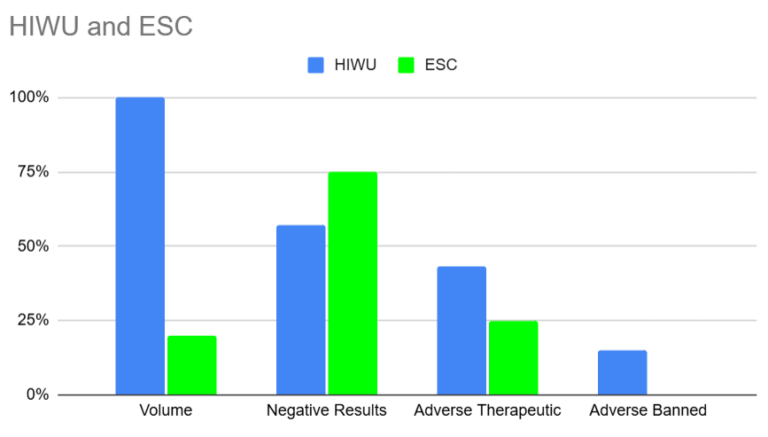
ESC Releases Annual Drug Testing Statistics

ESC Letter to Veterinarians

ESC Controlled Medication Policy Update
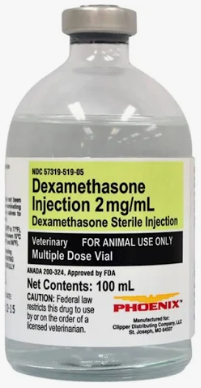
Understanding Dexamethasone in the Show Ring: Balancing Medical Care with Competition Integrity