Roadster Horse and Pony

ESC Rule Book
[ivory-search id=”9840″ title=”Rule Book Search Roadster”]

SC21 Roadster Horse & Pony
Show & Class Concepts
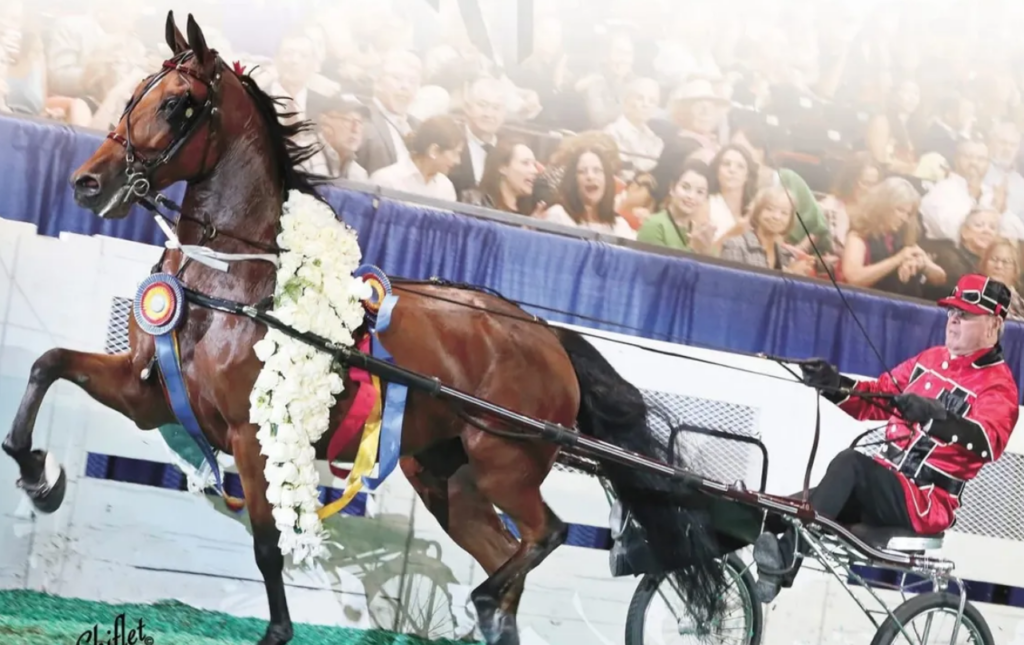
- SC21 Roadster Horse & PonyShow & Class Concepts
- Roadster Horse & Pony
- SC21.0 Sport Concepts – Roadster
- SC21.1 Eligibility & Type – Roadster Horse
- SC21.2 Eligibility & Type – Roadster Ponies
- SC21.3 Animal Welfare
- SC21.4 Show Protocol – Roadster Horses and Roadster Ponies
- SC21.5 Tack & Apparel
- CS21.0 Class Specifications – Roadster Horse and Roadster Pony
- CS21.1 Roadster to Bike Division – Classes Offered
- CS21.2 Roadster To Wagon Division – Classes Offered
- CS21.4 Roadster Pony Division
SC21.0 Sport Concepts – Roadster
SC21.1 Eligibility & Type – Roadster Horse
- Must possess the characteristics of a Standardbred, resembling a sleek racehorse.
- Non-breed specific horses competing in road horse classes must hold an identification number issued by the American Road Horse and Pony Association (ARHPA).
- Appearance should be pleasing, with balanced conformation and well-behaved demeanor.
- The head should exhibit refinement, featuring a broad forehead, slender throat latch, ample nostrils, and a shallow mouth.
- The neck should be slender yet muscular, extending into a well-developed chest.
- Legs should be refined and sturdy, supported by powerful shoulders and hindquarters.
- Presented with a full mane and tail, and may display any coat color.
- Tail carriage should be elevated while in motion.
- Roadsters may be showcased in bike, under saddle, and/or road wagon classes:
- Bike horses should demonstrate three distinct trot speeds while maintaining form, resembling a refined race horse.
- Under Saddle horses should possess elegance and the ability to carry their heads high naturally.
- Wagon horses are typically larger and more hearty in appearance than those exhibited in bike classes. They must possess the strength to pull a wagon comfortably without sacrificing form, and should complement the wagon’s appearance with their good looks.
SC21.2 Eligibility & Type – Roadster Ponies
- Are not required to have ID number or registration
- Must have a current Measurement Card or be measured prior to competing at an event.
- Road Ponies are not permitted to compete in Roadster Horse classes.
SC21.3 Animal Welfare
- Horses and ponies must exhibit smooth, natural movement without mechanical or labored gait during all required paces.
- Roadsters should demonstrate lively animation and a commanding presence while executing all necessary gaits.
- Shoeing practices should prioritize the enhancement of comfort, balance, and overall soundness of the horse. Penalization will occur for any signs of compromised movement due to excessive shoeing.
- The use of pads and wedges is permissible to safeguard the feet and limbs from the impact of the horse’s natural gait and maintain hoof wall integrity. Protective hoof bands are allowed to preserve hoof integrity and prevent shoe loss, which could otherwise cause hoof trauma.
- No horse or pony may participate in this division with any substance intended to alter tail carriage chemically or otherwise.
- Animals displaying indications of inhumane treatment will be disqualified from competition.
SC21.4 Show Protocol – Roadster Horses and Roadster Ponies
- Roadsters are required to trot at three distinct speeds: the jog-trot, the road gait, and full speed.
- Regardless of speed, they must maintain proper form, with their chins tucked and legs working efficiently beneath them.
- Headers are encouraged and permitted for these classes.
- A balanced trot is characterized by knees folding, hocks flexing, straight front leg action, and coordinated motion. Any deviation such as sprawling front legs, dragging hind legs, or straddle-gaited action is penalized.
- Roadsters should display animation, brilliance, and a commanding presence while performing at the jog-trot or road gait.
- Exhibitors must ensure their entries maintain form and show speed when required to drive on.
- Entries displaying laborious movement, pacing, or mixed gaits are penalized.
- Judges must emphasize the requirement for roadsters to perform at three distinct speeds and penalize exhibitors executing incorrect gaits.
- Roadsters must enter the ring clockwise at a jog-trot, then perform at the road gait, and turn counter-clockwise to repeat the process before trotting at speed.
- During line-up, exhibitors must continue in the second direction to reach the line-up area. Failure to comply will result in disqualification.
- Roadsters must maintain a steady trot along straight sections and around turns.
- Any entry deemed unsafe by the judge(s) must be excused from the class.
- Participants are expected to stay on the rail unless passing, reach the far end of each corner without leaning, respond promptly to gentle rein cues, and stand calmly when assessed in the center of the ring.
- Entries displaying inappropriate or dangerous behavior must be immediately eliminated.
- Drivers must sit towards the inside edge of the seat and hold the end of the reins. Both feet must remain in the stirrups during the performance except when in the lineup.
- Judges are responsible for ensuring safety regulations are followed.
- Workouts are judged both ways of the ring as a new class, with tied horses considered for placings.
- Entries may request one five-minute Personal Time Out per class, including workouts.
- When entries are in the line-up, drivers and attendants must refrain from taking any action that could impact another entry.
- In Juvenile, Youth or Amateur Roadster Horse or Pony classes, when entries are lined up, one attendant is permitted to enter the ring and head their entry. Attendants may hold the entry, but must release the entry when judges approach for inspection. The Roadster must remain checked and any adjustment of overcheck – such as moving to a string or lengthening – is prohibited and will lead to elimination.
- During a workout in Juvenile, Youth or Amateur Roadster classes, an attendant can be present in the ring for entries not participating in the workout. The attendant may uncheck and hold the entry during the workout, but after the workout is over, the entry must be checked again.
- A class is considered concluded when it has been judged according to the rules and the judges have submitted their cards. In qualifying classes, the judge’s cards must be submitted before an entry is eligible to compete in the Championship class.
- UPHA Classics – See Rules at UPHAonline.com
SC21.5 Tack & Apparel
Harness:
- Required equipment includes square blinkers, a snaffle bit, and an attached overcheck rein (optional overcheck bit).
- A breastplate featuring straight flaps, coupled with traces crafted in a rounded shape with flat ends, is required. In the case of pairs, English-style collars are utilized.
- Martingales are mandatory. Breechings must be utilized in all Wagon classes.
- In Horse Bike and Wagon classes (excluding Roadster Pony classes), the overcheck must remain attached to the water hook until the class concludes. If the check breaks or becomes detached, the entry must use a timeout to reattach it. If the check breaks or detaches a second time, the horse must be excused from the ring by the judge(s). In such cases, the horse will still qualify for the championship.
Vehicles
- Roadsters are to be presented with a Bike, Road Wagon, or Caffrey style Buggy. All vehicles must exhibit good appearance and stability.
- Horse Bikes must adhere to a standard size of at least 48” width with a double seat.
- If the judge determines a vehicle to be unsafe, the entry must be excused from the ring. Entries excused under these circumstances will still qualify for the championship, provided the vehicle complies with the rules.
Appliances
- Horses and ponies are not permitted to be shown with artificial appliances, except for those listed within this chapter as acceptable.
- The use of shackles, draw reins, kicking straps, German martingales, or other training devices is prohibited in the competition ring.
- Leather straps without appendages are permitted as action devices in warm-up areas on the competition grounds during or before a competition. Rubber or elastic exercising devices fastened with a stable ring on a simple leather strap are also acceptable, with the option of covering them with wool or fleece for protection. However, attaching elastic straps or devices to any portion of the harness or bridle is not allowed. Furthermore, using chains or rollers as action devices on the competition premises during or prior to a competition is strictly forbidden.
- Inconspicuously applied hair in the tail is permitted.
- The front feet may have protective boots.
Attire
- In Bike or Under Saddle classes, the entry is required to wear Roadster Silks, a cap, or protective headgear. Entry numbers must be displayed on the driver’s or rider’s back.
- In Road Wagon classes, exhibitors are to wear a business suit with a hat of their choice. The entry number is worn on the driver’s back.
- The use of electronic communication devices for coaching purposes outside the ring is prohibited in all Roadster Division classes, except for individuals with a permanent hearing impairment who are permitted to use such devices upon submission of written certification from a treating medical professional.
- Exhibitors with disabilities (other than hearing impairment) will be provided reasonable accommodation upon submission of written certification from a treating medical professional’s office, identifying the necessary accommodation for safe competition. The certification must be provided to the competition Manager/Steward within a reasonable timeframe prior to competing.
- Protective headgear is strongly recommended for all participants in any class within the Roadster Division, unless otherwise mandated by local law.
- Juvenile Exhibitors in Roadster to Bike or Roadster Under Saddle classes are required to wear well-fitted protective headgear while riding or driving anywhere on the show grounds. Helmets must be securely fastened and appropriately adjusted.
CS21.0 Class Specifications – Roadster Horse and Roadster Pony
- Bike and Wagon Horse classes must be split if there are more than 10 entries.
- Under Saddle Horse classes must be split if there are more than 12 entries.
- Roadster Pony classes must be split if there are more than 16 entries.
- Roadster to Bike Green Driver classes must split if more than 8 entries.
- Split classes should be divided by selecting every other number on the list of entries, with separate prize money allocated.
- It is recommended that classes for Juveniles be divided by the age of the driver, and a Juvenile Championship be offered.
- Notification of intent to divide must be provided at least one hour prior to the start of the session.
- Divided sections must be posted in the competition office and announced over the public address system or listed in the program.
- Classes may be divided according to gender.
- The entire prize money can be divided, and the division of prizes must be publicly announced at least one hour before the session commences.
- Stallions are prohibited in Ladies, Youth, and Juvenile classes.
In Roadster Horse Classes
- If no Youth Amateur qualifying classes are available, Youth Amateurs aged 15 and above are permitted to participate in Amateur, Open, Ladies, or Gentlemen’s qualifying classes.
- In the absence of a Youth Amateur championship class, those aged 15 and above may enter the Amateur Championship instead. Youth Amateurs aged 15 and above may only engage in Open Championship classes if no other championship options are provided at the event.
- The usage of protective headgear is mandatory for Youth Amateurs participating in these classes.
In Roadster Pony Classes
- If no Juvenile Championship is offered at the competition, ponies shown in Juvenile classes are eligible for the Amateur Championship.
- If an Amateur Championship is not offered, ponies shown in Juvenile classes are eligible for the Open Championship.
- Juveniles are allowed to show in Open Roadster Pony to Wagon classes and Amateur or Open Roadster Pony to Bike classes if Juvenile or Amateur classes are not offered.
- Juveniles must wear protective headgear in these classes.
- In Maiden/Novice/Limit Roadster, a horse or pony is classified as such if it has not obtained one/three/six first-place ribbons, respectively, at any competitions. Ribbons acquired within one category of the Roadster division do not contribute to the determination of Maiden, Novice, or Limit status if the horse competes in a different category (e.g., Bike to Wagon, Saddle to Bike, etc.).
- An Amateur/Youth Novice driver and an Amateur/Youth Limit driver is a driver that has not won three (3) first place ribbons for Novice and six (6) first place ribbons for Limit respectively at any competitions. Ribbons won within one section of the Roadster division do not count in the reckoning of Novice, and Limit Driver status if the driver competes in a different section.
CS21.1 Roadster to Bike Division – Classes Offered
Roadster to Bike – 3 Year Old – Payout Championship – Mane Event Horse Show
See Mane Event Prize List for qualification, rules and payouts.
Roadster to Bike – Open and Open Championship
Entries are initially presented at a jog-trot and road gait, followed by a reversal and demonstration at a jog-trot, road gait, and finally at speed. Judging criteria include performance, speed, quality, and manners.
Roadster to Bike – Amateur and Amateur Championship
The exhibition begins with a presentation at a jog-trot and road gait, followed by a reversal and demonstration at a jog-trot, road gait, and ultimately at speed. Judging criteria encompass manners, performance, speed, and quality.
Roadster to Bike – Amateur/Youth Novice/Limit Driver
Entries are initially displayed at a jog-trot and road gait, followed by a reversal and demonstration at a jog-trot, road gait, and concluding with speed. Judging encompasses manner, performance, speed, and quality. In the event of more than 10 entries, classes will be divided.
Roadster to Bike – Ladies and Ladies Championship
The entry is first showcased at a jog-trot and road gait, then reversed and presented again at a jog-trot, road gait, and finally at speed. Judging criteria include manners, performance, quality, and speed. This class is specifically tailored for a Lady driver.
Roadster to Bike – Juvenile, Youth Amateur
Emphasis will be placed on the manners of the horse as a crucial requirement to ensure safety. Judges are mandated to promptly excuse any horse exhibiting behavior that suggests it may be beyond the control of the driver. Protective headgear is mandatory. Exhibitors must fall within the age range of 15-21. Classes with over 10 entries will be divided, and headers will be permitted, and encouraged for these classes. The exhibition sequence involves starting with a jog-trot and road gait, then reversing and showcasing at a jog-trot, road gait, and finally at speed. Judging criteria encompass manners, performance, quality, and speed.
Roadster to Bike – Juvenile, Youth Championship
Entrants must have participated, shown, and been evaluated in a qualifying Youth class. Emphasis will be placed on the horse’s manners as a key safety requirement. Judges are mandated to excuse any horse that appears to exceed the driver’s control. Protective headgear is obligatory. Participants must be aged between 15 and 21. Classes exceeding 10 entries will be divided. Headers will be permitted, and encouraged for these classes. The presentation sequence includes a jog-trot and road gait initially, followed by a reversal and demonstration at a jog-trot, road gait, and finally at speed. Assessment criteria include manners, performance, quality, and speed
Roadster to Bike – Maiden/Novice/Limit
Entries are to be exhibited initially at a jog-trot and road gait, then reversed and displayed at a jog-trot, road gait, and finally at speed. Judging will be based on performance, speed, quality, and manners.
Roadster to Bike – Green Driver
Open to Juvenile/Youth/Amateur drivers 15 yrs and older. Manners will be emphasized as a major requirement to ensure safety. Judges must immediately excuse any horse that acts as if it may be more horse than the driver can handle. To be shown at the jog-trot and road gait both ways of the ring. Speed is not to be called. Must show a distinct change In speed between the jog-trot and the road gait. Attendants are allowed in these classes and classes must be split if more than 8 entries. To be judged on manners, performance, quality and speed. Eligible drivers will be new to the Roadster Division and may not have shown in more than 5 road horse classes in their competition lifetime (excluding Green Driver class). Ten (10) wins eliminates a driver from further competition in Green Driver classes, with the exception of one horse classes. Green Driver class entries may also exhibit in Youth, Ladies or Amateur classes at the same show.
Roadster to Bike – Pairs
Shown to Wagon first at a jog-trot, and road gait, then reversed and shown at a jog-trot, road gait, and then at speed. Judged on performance, speed, quality, manners, style, and Tack & Apparel.
CS21.2 Roadster To Wagon Division – Classes Offered
Roadster To Wagon – Open and Open Championship
The exhibition begins with a presentation at a jog-trot and road gait, followed by a reversal and demonstration at a jog-trot, road gait, and finally at speed. Judging will assess performance, speed, quality, and manners.
Roadster To Wagon – Amateur and Amateur Championship
Entries will be displayed initially at a jog-trot and road gait, then reversed and showcased at a jog-trot, road gait, and finally at speed. Judging criteria encompass manners, performance, speed, and quality.
Roadster To Wagon – Appointment Class
Entries must be qualified to compete in the OPEN, AMATEUR, OPEN CHAMPIONSHIP, or AMATEUR CHAMPIONSHIP categories. The presentation sequence involves beginning with a jog-trot and road gait, followed by a reversal and demonstration at a jog-trot, road gait, and finally at speed. Evaluation will be based on manners, performance, speed, and quality. Required Tack & Apparel include the following items: rasp, scrapper, hoof pick, screwdriver, farrier’s knife, farrier’s hammer, knife, goggles, matches, washers, spool wire, wrench, wire pliers, nippers, punch, oil can, horse shoes, horse shoe nails, blanket pins, whisk broom, flask, cooler, halter, rain coat/cover, curry comb, brush, lead strap, clock, and light.
CS21.3 Roadster Horse Under Saddle Division
Tack & Apparel
Presented under an English saddle, utilizing a running martingale and an open bridle with a snaffle bit, along with the option of a single or double rein. Protective boots are permitted on the front feet for the horse’s comfort and safety.
The rider must wear Roadster Silks, with a matching jacket and cap. Protective headgear is compulsory for riders aged 15 to 21 years.
Roadster Under Saddle Division – Classes Offered
Roadster Horse Under Saddle – Youth and Youth Championship
Participants must be aged between 15 and 21 years. The exhibition will commence with a presentation at a jog-trot and road gait, followed by a reversal and demonstration at a jog-trot, road gait, and subsequently at speed. Headers will be permitted for these classes. Evaluation will be based on manners, performance, quality, and speed. Emphasis will be placed on the horse’s manners to ensure safety. Judges are obligated to excuse any horse that appears too challenging for the rider to handle. Protective headgear is mandatory.
Roadster Horse Under Saddle – Open and Open Championship
The presentation will begin with a demonstration at a jog-trot and road gait, followed by a reversal and display at a jog-trot, road gait, and finally at speed. Assessment will be based on performance, speed, quality, and manners.
Roadster Horse Under Saddle – Amateur and Amateur Championship
Entries will first be showcased at a jog-trot and road gait, then reversed and presented again at a jog-trot, road gait, and finally at speed. Evaluation criteria include manners, performance, speed, and quality.
Roadster Horse Under Saddle – Championship
Participants must have been entered, shown, and judged in any other Roadster Under Saddle class within this section. The exhibition will commence with a presentation at a jog-trot and road gait, followed by a reversal and display at a jog-trot, road gait, and finally at speed. Evaluation will be based on performance, speed, quality, and manners.
CS21.4 Roadster Pony Division
- Classes for Roadster ponies to Bike are limited to ponies 13 hands (52” and under).
- If entries justify, two sections may be provided:
- 50” and under;
- Over 50” but not exceeding 52”.
- If two sections are available, a championship/stake may be offered for each section.
- If entries justify, two sections may be provided:
- In Under Saddle classes and Roadster Pony to Wagon classes, entries must not exceed 54”.
- During the lineup in classes restricted to Juveniles and Amateurs, one attendant is permitted to head the pony, but must refrain from touching the entry unless there is a safety concern. Any altering of overcheck ie: moving to a string or lengthening, is prohibited and will result in elimination.
- Entries may be unchecked and held during a workout. Following the workout, the pony must be rechecked and the attendant move away. The attendant must not take any action that would interfere with another entry.
- In all Ladies, Amateur, and Juvenile roadster pony classes, the judge(s) must inspect every entry in the lineup.
- If no Juvenile qualifying or championship classes are offered at a competition, juveniles may enter the Amateur or Ladies qualifying or championship classes, but protective headgear is required. If an amateur championship is unavailable, ponies shown in juvenile classes are eligible for the open championship. Juveniles are allowed to show in Open Roadster Pony to Wagon classes and amateur or open Roadster Pony to Bike classes if Juvenile or Amateur classes are not offered. The use of protective headgear is required by Juveniles in these classes.
- Roadster ponies must enter the ring in a clockwise manner and will be showcased first at a jog-trot and road gait, then reversed and shown at a jog-trot, road gait, and finally at speed.
Roadster Pony Division – Classes Offered:
Roadster Pony – Amateur to Bike
Judged on manners, performance, presence, quality, and conformation.
Roadster Pony – Single Roadster to Bike Juvenile or Ladies
Judged on manners, presence, quality, performance, speed and conformation.
Roadster Pony – Single Roadster to Bike Juvenile, Amateur or Ladies Championship
Entries must be shown by a Juvenile, Amateur, or Lady and judged in any qualifying class with the same judging specifications. If an amateur ladies class is unavailable, amateur ladies participating in the open ladies class will be eligible for the amateur championship. Evaluation criteria include manners, presence, quality, performance, speed, and conformation.
Roadster Pony – Single Championship to Bike
To be eligible ponies must be entered, shown and judged in another class in harness in this division. Shown to a bike. Judged on performance, speed, presence, quality, conformation and manners.
Roadster Pony – Juvenile Roadster Pony Under Saddle
Entries will be showcased under English saddle, utilizing a running martingale, open bridle with a snaffle bit, and single or double rein, along with protective boots. The rider must wear stable colors, a jacket, and protective headgear that matches. Judging will evaluate manners, performance, speed, presence, quality, and conformation. It’s important to note that saddle classes do not qualify a pony for harness championships.
Roadster Pony – Single Roadster to Bike 4YO & Under
Entries must be qualified to compete in the OPEN, LIMIT, NOVICE, and JUNIOR TO BIKE categories. Evaluation will be based on performance, speed, presence, quality, conformation, and manners.
Roadster Pony – Single Roadster Pony to Wagon
Ponies must be 54 inches and under. Entries will be evaluated based on performance, speed, presence, quality, and conformation. Exhibitors are required to wear a business suit with a hat of their choice. Breeching is mandatory in all wagon classes. If no championship is available for this class, it will serve as a qualifying class for the Single Roadster Pony to Bike Championship, provided the pony meets the height restrictions for Roadster to Bike entries.
Roadster Pony – Roadster Pony Combination
The class is open to Juveniles. Ponies will first be showcased in both directions of the ring as a Roadster pony to bike. Competitors will then be called to the line-up, where ponies will be unhooked and saddled, before being returned to the rail to be shown under saddle at the required gaits. Two attendants per entry are permitted to assist with the changing of Tack & Apparel. If the bridle is changed, the harness bridle must not be removed until the pony is completely unhooked from the bike. Ponies must be shown by the same rider and driver. In both segments of the class, ponies will be shown first at a jog-trot and road gait, then reversed and shown at a jog-trot, road gait, and finally at speed. The Roadster Pony to Bike segment will be judged on suitability, manners, performance, speed, and quality, while the Roadster Pony Under Saddle segment will be judged on manners, performance, speed, presence, quality, and the suitability of the rider to the pony.